In praise of pastors

Notes on Kevin DeYoung and Ted Kluck’s
Why we Love the Church:
in praise of institutions and organized religion

Chapter 4 : Appetite for Deconstruction (Why Church is boring, Christians are __…)

“The pastors’ conference was an eye-opening experience for me, a non-pastor. I got to spend a week having really interesting conversations with a whole bunch of mostly hardworking, earnest, kind pastors who are really concerned about shepherding their flocks and reaching them with the gospel.

…I had settled into a sort of de facto, either/or dynamic in which pastors are either wanna-be revolutionary types, or mostly boring but get-the-gospel-right young Reformed types. What I see here, at the conference, is a ‘both’ sitation. These guys, for the most part, are real and passionate about worship, about getting the gospel right, and about reach the lost. They sincerely care about reaching postmoderns, and not just because their future (read: members) depends on it. Most of them have been to seminary, and while seminary, as all of the ‘left the church and found God’ books will tell you, isn’t in any way a fast track to superspirituality, the majority of these men have spent more time studying the Scriptures and classic Christian texts than I have. I appreciate them for this.”

Ted Kluck, Why We Love the Church

What is it like to be a pastor in this day and age, when the trend among professing Christians is to be anti-church? I don’t know, but I can’t imagine it’s easy.

I can see this de facto either/or that Kluck refers to–either a pastor is hip and relevant or he is boring but Biblical. Either he’s chasing numbers and revolutionary ideas, or he’s stuck in the mud with yesterday’s doctrine. That’s the perception at any rate, the opinion you could easily get from reading the “get away from church” lit.

And then there’s the seminary thing–the books that say that seminary doesn’t do anything for pastors but turn them into dusty fuddy-duds. Seminaries are a thing of the past, today’s prognosticators declare. Call a seminarian and you’re fast-tracking your church for the grave.

That’s prevailing opinion–or at least that’s how prevailing opinion appears.

I’m heartened to hear of Kluck’s experience at this pastors’ conference. I’m heartened to hear of pastors who are passionate for postmoderns and passionate for sound doctrine. I’m heartened to hear that the seminaries aren’t dead–that young men still hunger after the Word of the Lord–and are willing to devote years of their lives to learning it.

It gives me hope for the church.

Kluck has a last coment about pastors in this segment of his chapter (yes, this is mostly footnote material): “They’ve also committed their lives to an enterprise (church) which can largely feel like a losing, uphill battle, and the Bible tells us will be out of place and largely reviled in culture. A lot of them feel discouraged and look tired.”

I can only imagine the burden these faithful men bear–the struggle to be faithful to the Word and relevant to this culture, the discouragement that comes with criticism from within and without.

Thank you, thank you, pastors–for bearing the burden, for devoting yourselves to the Word, for laying down your life for your people. Thank you, faithful shepherds, for taking hold of the call of God, for labouring for the safety and sanctification of the Lord’s flock.

I am encouraged by your service–and I pray that God would encourage your hearts in the good work to which He has called you. I pray, trusting that my God will supply all your needs, according to His riches in glory in Christ Jesus (Phil 4:19). It is a high call, a hard call, to pastor the church of God–but thank you for pressing on, despite all odds, towards the upward call of God in Christ Jesus (Phil 3:14).


The church in the popularity polls

Notes on Kevin DeYoung and Ted Kluck’s
Why we Love the Church:
in praise of institutions and organized religion

Chapter 3 : The Personal (On hurt and heresy)

Why do outsiders have a negative impression of the church?

According to DeYoung, this is somewhat of a truism: “If outsiders thought the church was hot stuff, they would become insiders. So, of course outsiders don’t like the church.” But DeYoung urges us to look deeper at how “outsiders” view the church. He encourages us to start by listening to what they’re saying–but also to take into consideration three vital points.

First, historically speaking, the young have always been the most disillusioned about religion and hypercritical of “organized religion”. Generally, this tends to be moderated as they age. Second, perceptions are not always reality–we should take seriously the perceptions of outsiders but be aware that the church is not always as they perceive it to be. Third, the church has often been despised–but that has not always been a sign of failure.

My take-home message from this segment of chapter 3 has been: if the church is unpopular with the world, it is for one of two reasons (or a combination of the two). Either we are failing to reflect Christ, or we are reflecting Christ. Either can result in unpopularity. The ultimate question that the church should ask when she reflects on her unpopularity with outsiders, then, is: are we reflecting Christ?

If the church of God fails to reflect Christ, she is little more than a social club and deserves the world’s derision. If the church of God shows partiality to the rich over the poor, she fails to reflect Christ and is worthy of derision (James 2:1-5). If the church permits or even glories in transgression, she fails to reflect Christ and is worthy of derision (I Corinthians 5:1-13). If the church fails to act in a decent and orderly fashion, she fails to reflect Christ and is worthy of derision (I Corinthians 14:22-33). If the church preaches some gospel other than the gospel of Christ, she fails to reflect Christ and is worthy of derision (Galatians 1:6-12).

But reflecting Christ is not a guarantee of popularity with the world–in fact, we have a guarantee that the world will hate us. John 15:18-20 makes this plain:

“If the world hats you, you know that it hated Me before it hated you. If you were of the world, the world would love its own. Yet because you are not of the world, but I chose you out of the world, therefore the world hates you. Remember the word that I said to you, ‘A servant is not greater than his master.’ If they persecuted Me, they will also persecute you. If they kept My word, they will keep yours also.”

Christ is a controversial figure. He always has been–and always will be. The great line between the believer and the unbeliever is how he responds to Christ. Christ is the great divider–either one loves Him (by the grace of God) or one hates Him. There can be no middle ground.

You may say that there are plenty in the world who love Jesus–that Jesus is doing just fine in the popularity polls. But what Jesus is this? Is this Jesus, the incarnate Son of God? Is this Jesus the crucified who conquered death? Is this Jesus who by His very coming judged the world (John 3:19)? Is this the Jesus who is popular?

No, the popular Jesus is not the Jesus of Scripture and history. This Jesus is a man, made in the likeness of man–a touchy-feely, non-controversial figure. As DeYoung states: “The Jesus they like is almost certainly not the Jesus who calls sinners to repentance, claimed to be the unique Son of God, and died for our sins. He is almost certainly a nice guy, open-minded, spiritually ambiguous, and a good example. He is guru Jesus who resembles Bono in a bathrobe.”

This is not the Jesus that the church is called to exemplify, regardless of whether doing so would increase our ratings in the popularity polls. We are called to be the church of Jesus Christ–the controversial, love-inspiring, hatred-inducing, flesh-killing, God-exalting Jesus Christ.

So the polls cannot be our indicator of success. We cannot judge ourselves based merely on how outsiders see us. Neither their love or their hatred for the church says anything of whether the church is succeeding. For their love could indicate that we preach a different gospel, giving them what their itching ears want to hear (II Timothy 4:3-4). If the church is universally popular, she has failed. On the other hand, the world’s hatred for the church is not a sign of success either. The world could hate the church because they hate Christ and the church reflects Christ–but it could be that the church is legalistic, discriminatory, sinful, and proud.

In light of this, how is the church to respond to her “failures” in the popularity polls? Is she to seek to do whatever it takes to improve her ratings? Is she to ignore the ratings because they are not accurate predictors of true success?

I believe she should do neither. Instead, she should carefully look at how outsiders view her and humbly consider whether she is being faithful to reflect Christ in each of those areas. If she is reflecting Christ, she should rejoice that she is being counted worthy to suffer for the cause of Christ. If she is not reflecting Christ, she should sorrow that she has brought shame to the cross of Christ–and her godly sorrow should lead her to repentance.

“Walk in wisdom toward those who are outside, redeeming the time. Let your speech always be with grace, seasoned with salt, that you may know how you ought to answer each one.”
Colossians 4:5-6


Artist Arlene Alda

Reading My Library
For my second time in two weeks, I am forced to squelch my natural dislike of counting books and to recommend yet another “1,2,3” book. For this last batch of children’s picture books from my library reading challenge included yet another counting book–and a surprisingly good one, at that.

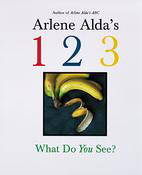
Arlene Alda&039;s 1 2 3
Arlene Alda’s 1 2 3: What do you see? is not your typical counting book–but it is typical of Arlene Alda’s artistic and imaginative writing and photography.

The text on each page is simple–just the numbers 1 through 10 with a particular number highlighted. But the photography is spectacular. Alda “finds” numbers in unexpected places–like the 3 found in the banana peel on the front cover. The book goes from 1 to 10 and back again for a total of two photos per number–from sources as diverse as a seashell, a flamingo, and the shadow of a bike.

Arlene Alda’s A B C: What do you see? takes the same tack, only with letters instead of numbers. Alda finds an A in a sawhorse, a B in a cut apple, a C in shrimp in a saute pan–and so on and so forth.

I marvel at Alda’s imaginative eye and have started to look for letters and numbers in my world too–Is that a T I see in that mailbox, centered on its post?

Alda continues to share her gift of creative sight in Here a Face, There a Face, where she finds faces in all sorts of organic and inorganic items. The text in this title is spare, but appropriate. “Looking up, Glancing down, Staring straight ahead. On a pot, in a pan, even on some bread.”

Did You Say Pears?

Did You Say Pears? takes on a slightly different flavour, exploring homonyms and homophones through words and photos. Alda poses a grand question throughout the book: “If [blank] is [blank] and [blank] is [blank], don’t you agree that pairs could be pears?” Some of the homonyms (words that have at least two different meanings) that Alda uses include: horns, pants, and glasses. Her homophones (words that sound alike but have different spellings and meanings) include blew/blue, flower/flour, and (of course) pairs/pears.

I am thoroughly enthralled with Alda’s writing and her photography. She is truly an artist–one who sees the world differently and invites her readers to see the world through her eyes. Check these books out next time you’re at your local library!


Hallowed be Thy Name…

Jesus taught His disciples to pray: “Our Father in heaven, hallowed be Your name.”

But what does it mean for God’s name to be hallowed?

Hallowed means set apart, revered–glorified.

Yet how is God’s name set apart? How is God’s name revered? How is God’s name glorified?

A couple of days ago I was reading in Numbers 20 when I came across an interesting set of verses.

“Then the Lord spoke to Moses and Aaron, ‘Because you did not believe Me, to hallow Me in the eyes of the children of Israel, therefore you shall not bring this assembly into the land which I have given them.’ This was the water of Meribah, because the children of Israel contended with the Lord, and He was hallowed among them.
Numbers 20:12-13

The people had complained against Moses because they had no water. Moses went into the presence of God. God told Moses to speak to a rock, which would bring forth water for them. Moses went and got angry with the people and then struck the rock, which then poured forth water for all the people.

But God was not pleased. Moses did not believe God, to hallow Him–to set Him apart, to revere Him, to glorify Him–in the eyes of the people of Israel. Instead, Moses took matters into his own hands: “Must we bring water for you out of this rock?”

God’s judgment ultimately came on Moses because he did not hallow God among Israel. Moses would not enter into the Promised Land.

Yet God would be hallowed–set apart, revered, glorified–among the Israelites. The difference is that He would be hallowed as just, in judging Moses–whereas had Moses believed, God would have been hallowed by Moses as merciful in providing water from the rock.

John Piper said something similar in a sermon I listened to this evening:

“The coming of Jesus into the world clarifies that unbelief is our fault, and belief is God’s gift. Which means that if we do not come to Christ, but rather perish eternally, we magnify God’s justice. And if we do come to Christ and gain eternal life, we magnify God’s grace.”
John Piper

God will be hallowed–either with or without the act of hallowing by man. But when man hallows God, he experiences great joy as a part of God’s glorification. When man does not hallow God, God’s hallowing is that man’s judgment.

I think of C.S. Lewis’s description of Aslan in The Lion, the Witch, and the Wardrobe. To those who loved Him (Aslan), He was great and wonderful–and even His name seemed fresh and sweet and lifegiving. Yet to those who hated Him, He was fearsome and awful and even His name made them cower and cringe.

For the glorification of God is the aroma of death, leading to death for those who are perishing–but the aroma of life leading to life to we who are being saved (2 Corinthians 2:14-16). It is one scent–the scent of the glory of God–but the unregenerate, unbelieving nostrils smell it differently. To them, God’s glorification is putrid–to we who are being saved, God’s glorification is life itself.

And so we pray, “”Our Father in heaven, hallowed be Your name–in Me.”


A Quarter of a Century

25 years ago today, I was born on West Wilkins Street in Lincoln, Nebraska.

I lived with my parents and my older sister.

I was at Rejoice in the Lord Church–4111 NW 44th Street–for church the next Sunday.

25 years later–today–I am here.

I live in Lincoln, Nebraska with two roommates. My parents, two brothers, and a sister live across the lawn. Two more brothers live across town. My older sister lives in a smaller town a couple of hours away.

I am attending church at Lincoln Christian Fellowship–4111 NW 44th Street–this morning. It’s the church I’ve attended all my life.

Check out a slide show of the in-between: Commemorating a Quarter-Century

A quarter of a century passes quickly–and those who have gone before me tell me that the second quarter passes even more quickly.

Not much has changed in this quarter century–and everything has changed in this quarter century.

I entered this world helpless, sinful, desperately needy. Today I stand as a conqueror, made righteous, wanting nothing. God has changed me in this 25 years–drawing me to Himself, transforming me through the cross, conforming me to His image.

I look forward to the next 25 years–the summer of my life. I know not what the future will bring. I know not what changes are in store for me. I suspect they may be great.

But I enter this season expectantly, not hesitantly–for there is one thing I know:

“And we know that all things work together for good to those who love God, to those who are the called according to His purpose. For whom He foreknew, He also predestined to be conformed to the image of His Son, that He might be the firstborn among many brethren. Moreover whom He predestined these He also called; whom He called, these He also justified; and whom He justified, these He also glorified.”
Romans 8:28-30

God has foreknown me. God has predestined me. He has called me. He has justified me. He is in the process of conforming me to the image of His Son. And someday, whether in this next quarter century or another, He shall glorify me–so that I can glorify Him for eternity.

Ah, I can rejoice in the next years of my life–for I have an assurance that goes far beyond the power of time and matter.

“Yet in all these things we are more than conquerors through Him who loved us. For I am persuaded that neither death nor life, nor angels nor principalities nor powers, nor things present nor things to come, nor height nor depth, nor any other created thing, shall be able to separate us from the love of God which is in Christ Jesus our Lord.”
Romans 8:37-39


Recap (March 7-13)

On bekahcubed

Book Reviews:

Recipes:

On the web

Books for the TBR list:

  • Keeping the Feast by Paula Butturini
    Memoir, Italy, food, depression. How can it get any better? I think I’m going to like this one.
  • Still Alice by Lisa Genova
    A novel about a still-young college professor who finds out she has early-onset Alzheimer’s disease. I think this’ll be a fascinating read.
  • Wishful Drinking by Carrie Fisher
    This memoir sounds like fun.

News to take note of:

Thought-provoking posts:

  • Are you more productive when you’re tweeting? (or Facebooking?) This essay suggests that maybe it’s good for our brains–despite office efficiency experts naysaying. What do you think? (HT: Buzzard Blog)
  • Does the devil have a favorite verse? Check out one man’s take.
  • Lincoln police chief Tom Casady responds to the assertion that legalizing pot would reduce police workload:

    “And then, of course, we’d be dealing with bootlegged pot operations to avoid the taxes, thefts of pot in interstate transport, sales of pot before noon on Sundays, selling pot without a license, failure to pay the occupation tax on your pot dispensary, possession of pot with no tax stamps, underage pot smoking, procuring pot for minors, providing pot to a person already intoxicated by a substance, attempting to purchase pot with false identification, toking while driving, and all the other criminal and regulatory violations we deal with concerning legal drugs like alcohol and tobacco. This is what I think about whenever one of these legalization advocates tries to convince me that legalizing marijuana would free up police resources. We’d still be up to our necks in it.”

    He has a point.

  • Is Christian doctrine boring? No way!

    “It is the neglect of dogma that makes for dullness. The Christian faith is the most exciting drama that ever staggered the imagination of man — and the dogma is the drama…. This is the dogma we find so dull — this terrifying drama [in] which God is the victim and the hero.” ~Dorothy Sayers

    HT: Buzzard Blog

  • In Defense of Marriage.
    Have we over-corrected for the idolatry of the married state by making it a cross to bear? Eric has some great thoughts on the topic.

Videos worth seeing:

  • Thank you, Abraham Piper, for warning us: This video does contain tobacco consumption.

    from Twenty Two Words
  • Dogs can do all sorts of things humans can’t–because they’re animals, and we’re not.

    HT: Vitamin Z

Self-Aware Revolutionaries or God-Aware Conventionalists?

Notes on Kevin DeYoung and Ted Kluck’s
Why we Love the Church:
in praise of institutions and organized religion

Chapter 2 : Turn the Page (Getting off the road and getting back to church)

Why We Love the Church is written by two men, Kevin DeYoung and Ted Kluck–and they write in alternating chapters. Odd numbered chapters are written by DeYoung and appeal mostly to the mind of the reader. DeYoung’s chapters are ripe with endnotes, mostly references to other published works. Even numbered chapters (like chapter 2) are written by Kluck and appeal more to the emotions of the reader. These chapters are filled with endnotes, too–but most of them turn out to be snarky asides to the reader.

I like the way this format allows each man to have his own narrative voice–while combining both of their perspectives for a more full defense of the church.

That being said, I find it much easier to write about DeYoung’s chapters, and much easier to relate to Kluck’s. DeYoung’s chapters are focused on propositional truths–things that can be easily grappled with in an objective sense. Kluck’s chapters are focused more on personal experiences–a more subjective, but no less real realm.

In chapter 2, Kluck explores our society’s obsession with being revolutionary adventurers. We love to overturn things, love to discover things. Memoirs of personal journeys (and blogs about personal journeys?) are some of the hottest literature of our day.

The revolutionary adventurers (and their books) are out in full force within Christendom. We can read dozens of memoir-type tomes telling the story of how some adventurer took a personal journey (with God?) that caused them to be a revolutionary and…drop out of church. Or, for something a little different, we can read one about how a revolutionary decided to drop out of church–so he could discover God.

The problem is that oftentimes, these revolutionaries don’t really do anything revolutionary. At least, nothing that would be considered revolutionary for the average non-God-fearing yuppie. They golf on Sunday morning with their pals. They go to concerts and movies and drive hybrids. They hang out at Starbucks and occasionally discuss social justice and the universe and other deep thoughts. And what’s more, the “god” they find oftentimes ends up looking, well, a lot like them. They become more self-aware. More aware of what they’re thinking. More aware of the wrongs that have been done to them. More aware of how everyone else is doing something wrong. But is that what the Christian life is about?

In seeking to be revolutionary and to “find God”, they end up being status quo and letting themselves become their god. Rather than being in a community of believers that forces them out of their comfort and forces them to be aware of God–they relax in their own company in comfort and self-awareness.

Kluck makes a great point towards the end of chapter 2:

In Revolution Barna says that he wrote the book to “help Revolutionaries gain a better understanding of themselves,” and “crystallize their self-awareness.” I would argue that we could do well with a lot less self-awareness, apart from the awareness of our own sinfulness and need for the gospel.
-Ted Kluck, Why we love the church

Wherever we’re at in the Christian journey, the last thing we need is more self-awareness. Knowing myself can only lead to death by narcissism or death by despair (depending on how truthful my knowledge of myself is). In and of myself, I am a dead creature, incapable of life or good. I poison everything around me. To become more self-aware is only to ingest my own poison and kill myself.

On the other hand, to be God-aware is to know life. It is to lose oneself in the grandeur of the infinitely greater one–and in losing oneself, one gains the life he could never gain on his own.

It is as C.S. Lewis says in the closing chapter of Mere Christianity:

It is no good trying to ‘be myself’ without Him. The more I resist Him and try to live on my own, the more I become dominated by my own heredity and upbringing and surroundings and natural desires…. I am not, in my natural state, nearly so much of a person as I like to believe: most of what I call ‘me’ can be very easily explained. It is when I turn to Christ, when I give myself up to His personality, that I first begin to have a real personality of my own…

Your real, new self…will not come as long as you are looking for it. It will come when you are looking for Him….Give up yourself and you will find your real self. Lose your life and you will save it. Submit to death, death of your ambitions and favourite wishes every day and death of your whole body in the end: submit with every fibre of your being, and you will find eternal life. Keep back nothing. Nothing that you have not given away will be really yours. Nothing in you that has not died will ever be raised from the dead. Look for yourself, and you will find in the long run only hatred, loneliness, despair, rage, ruin, and decay. But look for Christ and you will find Him, and with Him everything else thrown in.


Thankful Thursday: Everyday Life

Thankful Thursday banner

I’m a bit late on this week’s Thankful Thursday–but I am thankful, and I’ve been thanking God all day for…

…nylons without runs
…an unexpected break
…folded laundry
…expository sermons from John Piper
…clean desktops
…fantastic employers
…dinner with my family
…a puzzle put together
…a break coming up

And above all that, I’m thankful that while I was dead in my sins, Christ made me alive. What a glory to be captured by His irresistible grace!


Kids, I blew up the honey

There was a little over a tablespoon worth of honey in the honey bottle–just enough for my peanut butter and honey sandwich. The problem was, it was solid.

So I stuck the bottle in the microwave and, too lazy to push the buttons for just a couple of seconds, pushed the “minute plus” button.

Then, too industrious to do nothing while in the kitchen, I started emptying the dish drainer.

About 45 seconds later, I heard an enormous “POP!”

The lid had been blown off the now shriveled honey bottle and a thin layer of honey evenly coated all six internal surfaces of the microwave.

Well, at least the microwave got cleaned today.