Recap (2015.08.01)

In my spirit:

  • Contemplating how God’s grace “[trains] us to renounce ungodliness and worldly passions, and to live self-controlled, upright, and godly lives in the present age.” (Titus 2:12)
  • Gearing up to teach preschool Sunday School this year – and praying God grants grace and wisdom to teach Christ, not mere morality.

In the living room:

  • I read a novel this week – and have decided that novels ruin me for everyday life. I start chafing at my chores, wishing I could just be sitting devouring another book. And, this would be why nonfiction is what I read at this point in my life.
  • The library needs to stop having booksales. My bookshelves are already all full to overflowing and I can’t resist low-cost books – so I always end up coming home with a stack I have no idea where to house.

In the kitchen:

  • Slow cooker meals are certainly preferable to oven meals in the summertime – and we love this Slow Cooker Orange Chicken. I make it healthier by adding 8 oz snow peas (stemmed and cut in half), 1 can pineapple tidbits (drained), 1 green pepper (cut into 1/2 to 1 inch chunks), and 1 red pepper (also cut into chunks) about 30 minutes to an hour before serving.
  • I tried making some veggie and cheese enchiladas with black beans, zucchini, colored bell peppers, onions, and mushrooms. I thought it was delicious – Daniel thought it could use some meat :-)
  • I’m adding lots of veggies to dishes – including adding chickpeas, spinach, and acorn squash to this Chicken Peanut Curry. It was a winner in my book.
  • This Glazed Lemon Zucchini Bread looked good – so I made a sourdough version, reducing the sugar and oil by half and skipping the glaze. It was good, but not great – it felt like it had too little lemon and too little zucchini. I’m sure the glaze would have added some lemon flavor, but the small amount of zucchini felt too bad. I think I’ll try modifying a different recipe that includes more zucchini to get the same lemon/zucchini combo.

In the nursery:

  • I put Tirzah Mae in her crib Sunday evening and she crawled over to the bars and pulled herself up as if she’d been doing it all her life – so her mattress got lowered right then and there (Thank you, beloved!)
  • After what seems like months of what I was sure was teething, Tirzah Mae has finally gotten her first tooth – but she’s teasing other parts of her gums, making me think there are others not far behind.

In the craft room:

  • I finally got around to making pom-poms today when a friend came over to visit and craft – this method didn’t end up working out for me, but we found another that works reasonable well.

In the library:
aka “Books added to TBR list”

In the garden:

  • I got two green beans this week. Two. From 18 plants.
  • But the broccoli is still going strong, my cucumbers are giving me a steady trickle, and the peppers are setting on some more fruit. Also, the tomatoes, once they ripen, will be abundant

On the land:

  • Still waiting on the construction loan
  • The septic guy came out to dig some test holes to determine percolation rates (basically, to confirm that our soil doesn’t absorb water so we’ll need the advanced system we’re getting.)

On the web:


No other stream

Who from among the lovers of Narnia has not quoted Mr. Beaver’s famous words: “Safe? … Who said anything about safe? ‘Course he isn’t safe. But he’s good.”

I certainly have, many a time.

Beaver was, of course, responding to Susan’s initial fear upon hearing that Aslan was a lion, not a man. When she had thought Aslan was a man, she had experienced that strange feeling – “like the first signs of spring, like good news”. But now that she knew she would be meeting a lion, she felt apprehensive. When the time came that she would actually meet Aslan, she felt apprehensive as well, begging Peter to go greet Aslan – Peter was the eldest after all.

Jill Pole’s initial experiences with Aslan were completely different. Her classmate had just fallen down an enormously high cliff and while Jill was prostate on the cliff in terror, an animal had rushed over and was breathing right beside her, so close she could feel his chest vibrating. She couldn’t move at first, but once she could, she saw that it was a lion. At that very moment, the lion stalked away.

Jill became thirsty, and when she did, she rose from her place on the ground and began to search for water, moving cautiously for fear of the lion. She safely tiptoes her way through the trees and at last finds her heart’s desire. Water. At this point, the thing she wants most in all the world. The thing she feels sure she will die without.

But the lion.

The lion was lying right there, between her and the stream.

She stopped short in terror. She could not advance towards the stream. The lion might kill her. She could not run away. The lion might kill her. She was desperate.

This was no lovely thrill of spring or good news. This was only terror.

And then the lion spoke. He offered her drink.

She asked him to move. He refused. She tried to negotiate for her safety. He refused. She tried to reassure herself that he wasn’t as dangerous as she felt he was. The lion would have none of it:

Do you eat girls?” she said.
“I have swallowed up girls and boys, women and men, kings and emperors, cities and realms.”

He couldn’t get any more unsafe.

Jill decides to forgo the stream. The lion reminds her that she will die without it. She tries to find another way, another stream – one that she would not have to go through the lion to get.

“Oh dear!” said Jill, coming another step nearer. “I suppose I must go and look for another stream then.”

“There is no other stream,” said the Lion.

And such is the crux of Jill’s dilemma.

There was no other stream. And this stream was accessible only through Aslan.

Aslan the great and terrible – the swallower of children, of adults, of kingdoms.

The only way she could live was to throw herself at His mercy.

And so she did, with no reassurances of His goodness.

Her situation was completely different than Susan’s – she had no assurances that this unsafe god was good. She would learn that, but she didn’t know it now.

For now, her only reality was that

“There is no other stream.”


I’ve been reading The Silver Chair as part of Carrie’s Chronicles of Narnia Reading Challenge. Don’t forget to check in there to see what others have been reading this month.


Read Aloud Thursday (July 2015)

For the most part, Tirzah Mae and I have been reading board books by the same authors as we read last month – because, of course, her mother intends to read every book at our local library and working systematically from where we started seems the best route to take :-)

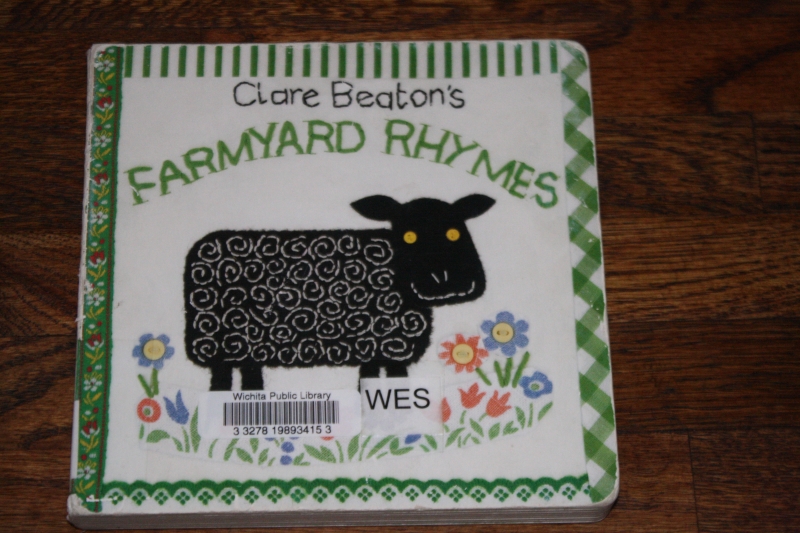
Clare Beaton’s Farmyard Rhymes
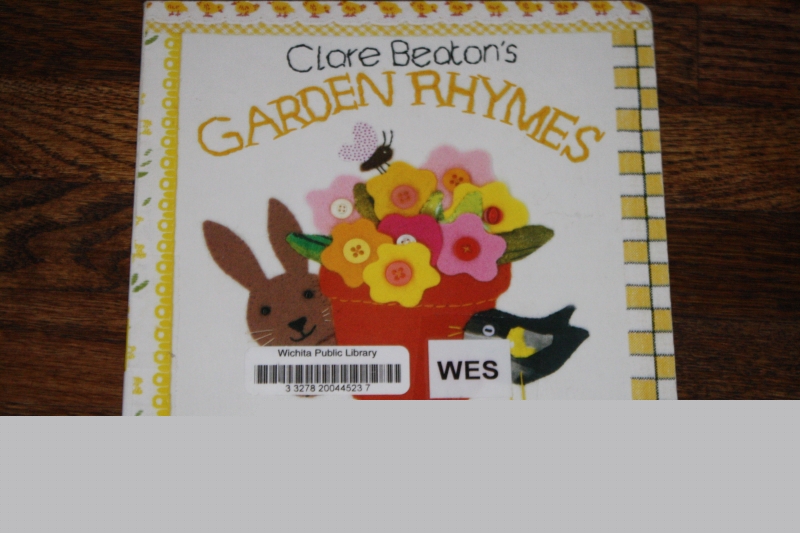
and Clare Beaton’s Garden Rhymes

Clare Beaton's Farmyard RhymesClare Beaton's Garden Rhymes

These are just like Clare Beaton’s Nursery Rhymes (which we read last month.) They have the same type of lovely embroidered and appliqued artwork accompanying familiar and unfamiliar rhymes. I would love to own copies of Clare Beaton’s books – Tirzah Mae likes the rhymes and I love the artwork.

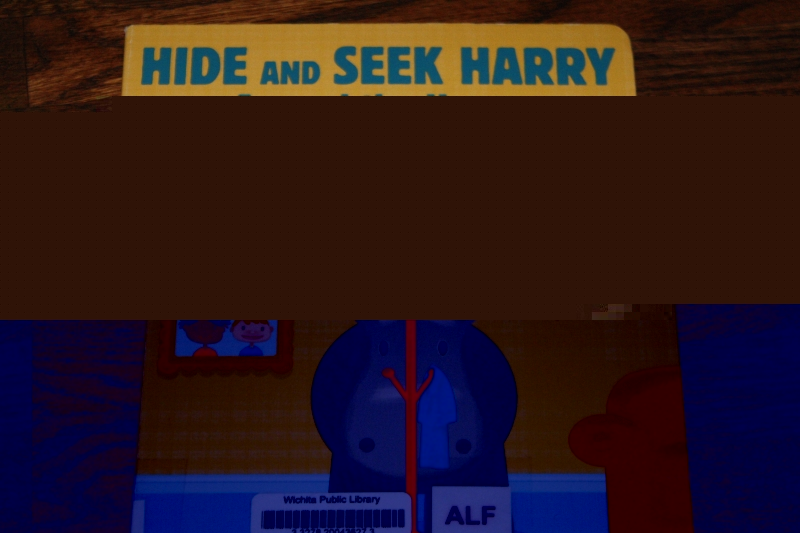
Hide and Seek Harry Around the House by Kenny Harrison

Hide and Seek Harry around the House

I believe this is the first of the Hide and Seek Harry books – we read Hide and Seek Harry at the Beach last month. Just like last month, we found plenty of things to point out as Harry the Hippo “hid” in each of the rooms of a house.

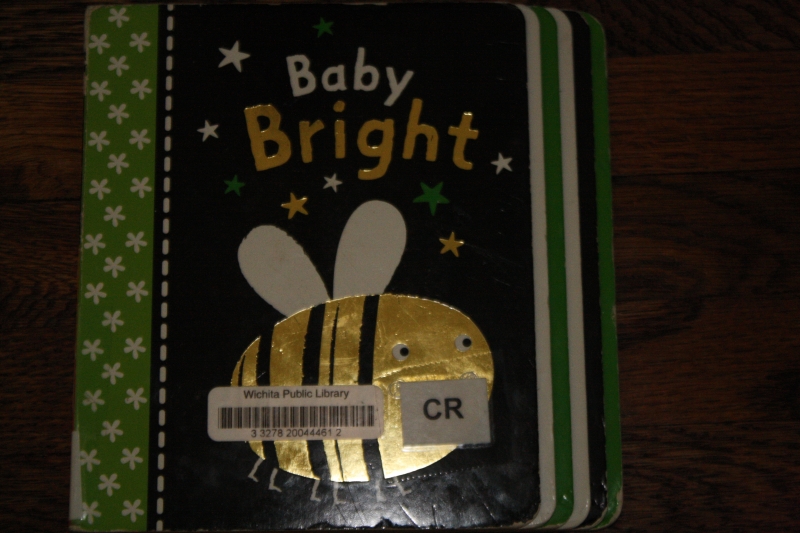
Baby Bright

Baby Bright

I found Baby Shine asinine last month, but I wouldn’t skip reading a book my library owns for such a small beef – so I requested Baby Bright to finish out the series. Baby Bright is green and yellow (Baby Shine had blue instead of yellow), black and white, but with gold leaf instead of Shine’s silver leaf. Tirzah Mae enjoyed the shimmering (again), and her mother found this title slightly less annoying – since at least every two page spread has a theme of sorts (mouse/cheese and owl/moon). Still. Ugh.

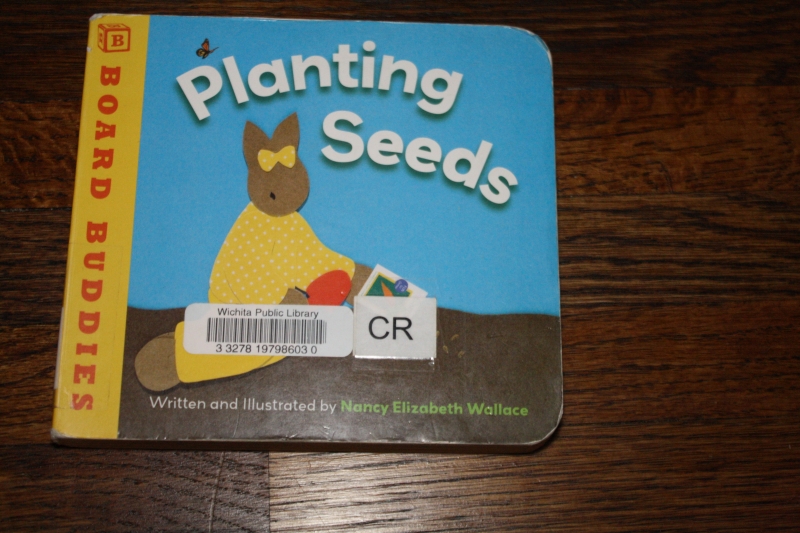
Planting Seeds by Nancy Elizabeth Wallace

Planting Seeds

A simple counting book in which a family of brown bunnies take a garden from digging to eating. The illustrations are in cut paper and there are generally at least two different objects to count the appropriate number of (six bunnies, but also six visors and six dragonflies). I can see this one being quite a bit of fun once Tirzah Mae is ready to start learning to count – and once she understands what we’re doing when we’re gardening. For now? She isn’t tremendously impressed.

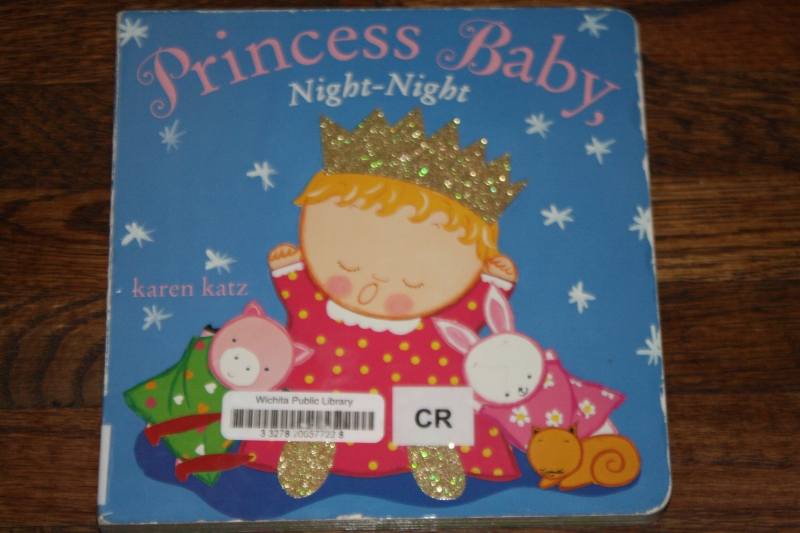
Princess Baby, Night-Night by Karen Katz

Princess Baby, Night-Night

This book takes the prize for most annoying book read this month. A parent asks “Princess Baby” if she’s completed each step of her bedtime routine (always starting with “Princess Baby, did you…” The little girl replies that she has and the illustrations show her doing each step with her stuffed animals and dolls. Finally, the little girl falls asleep among her toys and her parents put her into her bed. Of course, she does all of this while wearing a glittery golden crown.

Where do I start? Can you think of any more annoying moniker than “Princess Baby”? I’m personally not a fan of calling little girls princesses. Yes, all little girls dream of being princesses, and it’s fine for parents to let them play that – but better that they know that isn’t who they actually are. Teach them that they’re valuable as who they are, right now. Anyway, I don’t like the “princess” thing. And that’s probably the bulk of why I don’t like this book. Yep. Just prejudice against princessing. You may think otherwise.

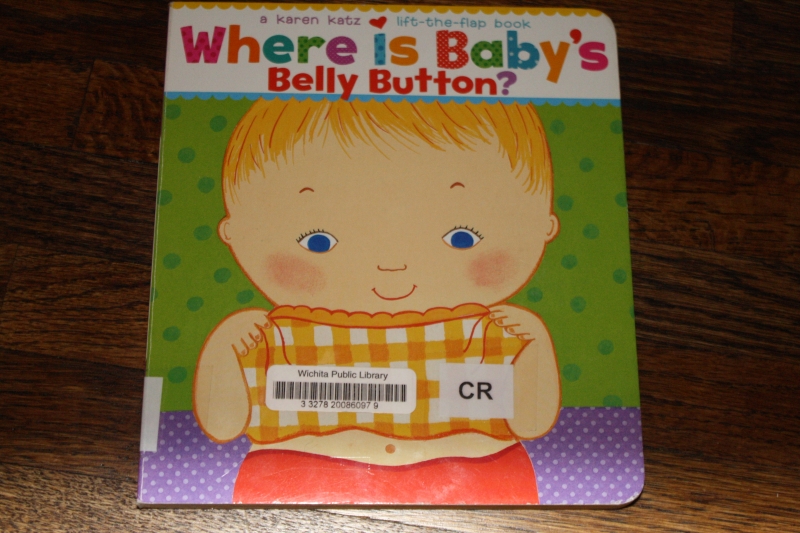
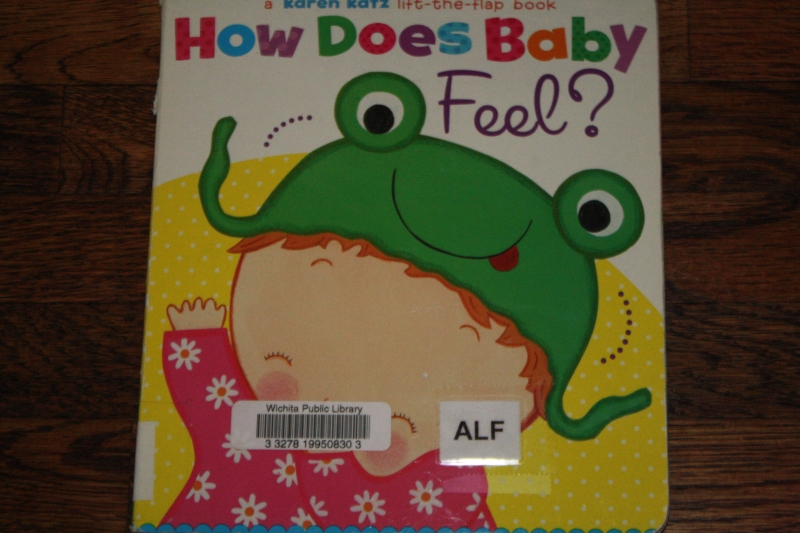
Where is Baby’s Belly Button?
and How Does Baby Feel? by Karen Katz

Where is BabyHow Does Baby Feel?

In Where is Baby’s Belly Button?, each double page spread asks where a certain body part of baby’s is – and then the reader lifts a flap to reveal that body part along with a few more words. So “Where is baby’s mouth?” has a fold down sippy cup with the words “Behind the cup!” on the opposite side of the flap. Tirzah Mae loved the repetition of this book, especially since she’s familiar with the cadence of mama’s voice playing peekaboo. I enjoyed reading it to her, but didn’t exactly enjoy trying to keep her from ripping the flimsy cardstock weight flaps.

How Does Baby Feel? describes a picture on one page (“Baby is yawning”) and asks “How does baby feel?” When the reader lifts a flap, she reveals that baby feels… “Sleepy.” I had the same complaints about flimsy cardstock with this one – and it had less cadence and familiarity, so Tirzah Mae didn’t enjoy it as much as Where is Baby’s Belly Button?

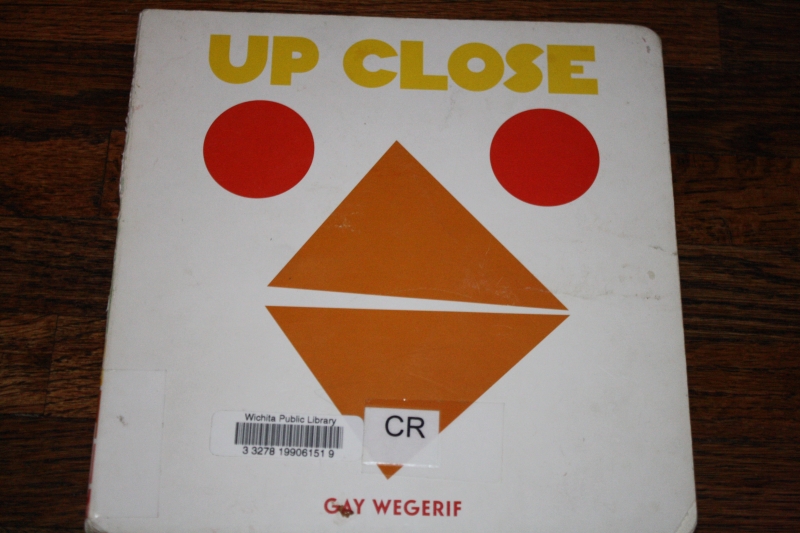
Up Close by Gay Wegerif

Up Close

A bigger than usual board book, this one has a format similar to that above except that instead of lifting flaps, one turns the page. The first two page spread states “Up Close, I see your [body feature]. You are a…” and the second declares what the animal is, accompanied by a zoomed out graphic of that animal. Problem is, the simple geometric shapes making up both the “up close” and the zoomed out images are so simplified as to be unrecognizable (most of the time.) This is an artsy book, but not one that’s particularly worthwhile for kids (in my opinion.) Tirzah Mae liked the shapes and colors though.

Black on White and
White on Black by Tana Hoban

White on Black/Black on White

Also in the artsy realm, these two wordless books contain black and white outlines of familiar and unfamiliar objects. A bib. A leaf. A bucket. A sailboat. A necklace. A bird. They’re visually interesting but don’t have a whole lot to talk about.

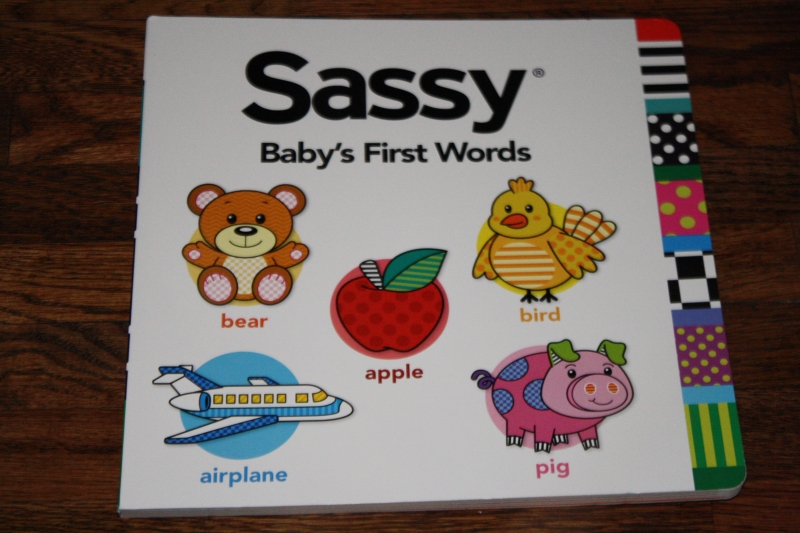
Baby’s First Words by Sassy

Sassy: Baby's First Words
We got this book thanks to Dolly Parton’s Imagination Library and enjoyed talking about all the things we saw inside. A farmyard complete with animals and tractors and barns and haystacks. A highway running along a canal with a train track nearby and planes flying above. A picnic with a variety of food items. This was a hit with both Tirzah Mae and her mother.

Check out what other families are reading aloud at Read Aloud Thursday at Hope is the Word.


Not as bad as I make it look

Do I make parenthood look bad?

It’s the question I asked myself as Daniel drove us home from our twice-monthly dinner club.

We’re the first couple among the group who’ve had children while continuing to regularly attend – and when people ask me how I am, I’m likely to respond that I’m tired, Tirzah Mae’s not been sleeping, it’s got to be teething, or (my favorite line) “I signed up for this – and it’s only another twenty years or so.”

But is that the sum of how I feel about parenthood? How I feel about myself as a stay-at-home helpmeet or about Tirzah Mae as my 24/7 companion?

No. It’s not.

Parenthood is hard, make no mistakes about it. But it is also rewarding, fun even.

But the “Happy Food” friends ask me when I’m hungry because it’s an hour after my normal eating hour, when I’m exhausted because I’m at the end of the day (and quite possibly after my usual bedtime.) So I respond with a litany of complaints.

I remarked on this to Daniel and he responded that I was being honest. That I have found parenthood hard.

And it’s true. Parenthood has been hard. But I realized that even Daniel doesn’t see the fun I have.

By the time Daniel gets home from work, I’m hungry (it’s almost dinner time!) and I’m tired (it’s been a long day of work and play.) Tirzah Mae gets clingy right around the same time I’m trying to get dinner prepared, so I’m often feeling stressed about juggling cooking and a clingy child. So Daniel hears my frustrations, my exhaustion, my readiness for a break.

When Tirzah Mae and I go out in the morning and I talk with other moms, I’m more than likely stressed about having had to get out of the door by a specific time and I’m working to keep Tirzah Mae’s normal morning energy under control so she’s not disrupting whatever we’re doing. So I’m likely to be happier than at night, but still frustrated.

What no one else sees is what happens in the mornings and early afternoons, while Tirzah Mae and I are both well rested and well fed. We roll around on the floor laughing. We dance around the living room. We make faces at one another. We cuddle. We go out on the front porch and watch the rain streaming down, occasionally sticking our hands in the overflow from the gutters. We talk through the ordinary events of our day – making oatmeal, changing diapers, making the bed, putting on makeup or brushing my hair, cleaning the toilet, watering the garden, washing dishes, emptying the dehumidifier, folding laundry or hanging it to dry,

I’m sorry for how I represent parenthood. It’s not as bad as I make it look.


Nightstand (July 2015)

After last month’s success with reviewing, it’s almost guaranteed that this month I’d be behind on reviews – but not too far. Mostly, I have lots to write about NARNIA.

Fiction read this month:

  • The Invention of Wings by Sue Monk Kidd
    My in-real-life bookclub selection for the month of July. I’m going to review this someday (maybe) – but, for now, I’ll just say that it’s a powerful fictionalized retelling of the life of Sarah Grimke, a noted abolitionist and early women’s rights activist. It’s definitely worth reading.
  • The Silver Chair by C.S. Lewis
    I’m in Narnia for the Chronicles of Narnia Reading Challenge – and was surprised at how little I remember from this book (it’s been, what, five years since I last read it?) I have lots of thoughts but haven’t written any up yet – which means you might be inundated over the next week.
  • 2 picture books author last name BROWN
    I’m moving really slowly through the “Arthur books” because, well, I rather despise them. Thanks to all those who offered some alternatives on that post :-)
  • 13 board books
    I’ll be talking more about these on Read Aloud Thursday – coming up in just a couple of days!

Nonfiction read this month:

Books about Children and Parenting:

  • Before Their Time by Daniel Taylor and Ronald Hoekstra
    A wonderful collection of stories from a Neonatal Intensive Care Unit in Minneapolis. I reviewed it, and wrote a few more reflections about our own NICU experience, in this post.
  • Your Child at Play: Birth to One Year by Marilyn Segal
    A month-by-month guide to your baby’s development with lots of activities you can do with your child. I loved it, but it’s a bit outdated and modern parents might notice some safety concerns. You can read my full review here.

Books about Essential Oils:

  • Essential Energy by Nikki Goldstein
  • The Essential Oils Book by Colleen K. Dodt
    Everyone and their dog is doing essential oils these days, so I figured I’d try to see what the buzz is about. So far, I see lots of unsubstantiated claims and frankly silly pseudoscience. Does that means there’s nothing to it at all? No, not necessarily – just that there’s a lot of opportunity for research, and that until the research has been done, it’s worth taking the advice of aromatherapists with a grain of salt. I have mini-reviews of these written, just not posted. So…one of these days.

Books about Health:

  • Lean Mommy by Lisa Druxman
    An excellent, balanced approach to establishing a healthy lifestyle after having a baby. Even if you don’t plan on doing Druxman’s “Stroller Strides” exercises, this is still a worthwhile book to have postpartum. I wrote about the book (and about my own postpartum body issues) here.
  • Eat This, Not That! by David Zincezenko and Matt Goulding
    The concept of this book is great as a column, not so great as a book – lists of the “best and worst” foods in more than a dozen categories (and healthier switches you can make.) I reviewed the book in greater detail here

Books about Houses:

  • Atomic Home: A Guided Tour of the American Dream by Whitney Matheson
    Sparse text. Lots of full-color pictures, generally from advertisements, of tract homes (and their furnishings) from the 1950s. Lots of kitsch. Lots of reminiscing (except that it isn’t reminiscing for me ’cause I never experienced the ’50s). Lots of fun.
  • Get Your House Right by Marianne Cusato & Ben Pentreath
    I skimmed rather than read this almost 250 page text aimed at preventing McMansions. It contains a lot of good architectural advice – and a lot of supercilious upturned noses.

Don’t forget to drop by 5 Minutes 4 Books to see what others are reading this month!

What's on Your Nightstand?


Book Review: Eat This, Not That! by David Zincezenko and Matt Goulding

You’re flipping through a magazine at the doctor’s office and a column catches your eye. “Eat This!” it proclaims, pointing at a full-color photo of some restaurant entree. Beside it, another photo declares, “Not That!” A couple call-out boxes give fast and dirty nutrition info, the amount of calories you’ll save by switching from one entree to the other, and some other quick nutrition trivia about one or the other of the items.

Fun, right?

I imagine I’d think so if I saw such a column (although it’s unlikely I would, since it could – maybe still can? – be found in Men’s Health).

Now, put 415 pages of that together into a book about the dimensions of a children’s board book, except, well 415 pages long.

Fun?

Not exactly. Or at least, I didn’t think so.

Eat This, Not That! has 24 chapters, including “The Best (& Worst) Breakfasts in America”, “The Best (& Worst) Supermarket Foods”, and “The Best (& Worst) Foods for Your Blood Pressure”. Each chapter includes a two page “Eat This, Not That” spread like the one I listed above, before providing a countdown of 15-20 of the worst foods (with plenty of pictures). Each “worst food” (example: “saltiest packaged side”) is accompanied by an “eat this instead!” – giving a similar item that’s not as unhealthy. The end of each chapter gives a “Hall of Fame”, with about five items that are good bets.

Overall, the information is pretty good – mostly focused on calories, sodium, fat calories, and trans fats. Callout boxes highlight things to look for or substitutions to make (pesto instead of mayo switches healthy fats for unhealthy and adds antioxidants) and little blurbs here and there discuss how to choose a healthy sandwich, for example, or make a healthy pizza.

But a whole book of it is simply not sustainable. I love food. I love nutrition. But I struggled to make it through this book (that said, most people probably aren’t going to read every word like I did.)

Now, a lot of that might be because I don’t eat a lot of restaurant food or prepackaged meals or snacks. If I do, I’m choosing it as an indulgence. All that “if you switch this for that once a week, you can save x pounds per year” stuff? It doesn’t really apply to me because I don’t drink sweetened drinks, don’t eat packaged snacks, don’t buy frozen meals, don’t go to restaurants frequently. Someone else who finds themselves relying on convenience foods or restaurants for a greater portion of their intake might find this book more useful.

Of course, I wouldn’t be myself unless I had some sort of beef with this book nutritionally speaking. The authors are wary of additives and anything unpronounceable – in a way that ignores what science actually exists about the additives they’re denigrating and fails to recognize that some food additives actually make our food supply more safe! Believe it or not, a long ingredient list doesn’t mean you shouldn’t eat something. (In fact, I have quite a few recipes that have 20, 30, 50 ingredients once you count the ingredients that went into the components of the recipe.)

So… should you read this book? Eh, check it out of the library and browse it, especially if you use a lot of convenience foods and/or eat out a lot. But I wouldn’t buy it.


Rating: 2 stars
Category: Nutrition
Synopsis: The authors give lists of the best and worst foods you can buy at restaurants or prepackaged at the grocery store – and substitutions to improve your nutritional choices.
Recommendation: Neat concept for a column, okay to browse, but not great for reading straight through.


Recap (2015.07.26)

In my spirit:

  • I finished 2 Thessalonians and am on to Titus – thinking about how sound doctrine enables us to devote ourselves to good works (versus foolish controversies)
  • Learning that “loving my husband and child” doesn’t always mean being touchy-feely. It’s hard work – and can go against the grain.
  • Grieving and rejoicing over the death of a man from church, the father of a friend, who welcomed us warmly into their extended clan when we first started attending at First Free. 62 years is such a short time to live, but Stu lived it for God’s glory – and is now standing beholding God’s glory.

In the living room:

  • Daniel had arranged for us to have lunch with family friends yesterday – so I spent the morning cleaning the house like a crazy woman. Half hour after the arranged time they texted us to ask if we were still on – come to find out they’d never actually specified whose house we were having lunch at and both sides had assumed they’d be hosting. My meal was cold dishes, so I put my stuff in the fridge and we had dinner at their house. But at least my house is clean. (*Looking around… er, at least my house WAS clean :-P)
  • We had some excitement this week when a domestic dispute in the neighborhood turned ugly and police were searching the area for a runaway shooter. Tirzah Mae and I had lots of little talks about what police officers do and about the different units we saw – patrol cars, canine units, CSI.

In the kitchen:

  • A gal from church gave us zucchini, so I improvised a one-pot pasta dish with zucchini, tomatoes, sun-dried tomatoes, peppers, and sausage seasoned with Italian herbs. It was quite good – I’m glad I wrote down what I put into it as I went along :-)
  • If you’re like me, you grew up eating grilled cheese made with American cheese (and I loved it, so long as it was accompanied by from-scratch tomato soup). These Caprese Grilled Cheese Sandwiches are a grown-up and oh-so-delicious variation on the theme (no soup required!)
  • We have tons of grape juice concentrate left over from past Seders, so I mixed up a can to use for my Jello salad. Have you ever made “homemade” jello with Knox gelatin and fruit juice? You should. All you’ve got to do is sprinkle 1 packet Knox gelatin over 1 cup cold grape juice. Let it sit for a minute to hydrate before adding 1 cup boiling grape juice (I boil it in the microwave in my Pyrex liquid measure). Mix until gelatin is dissolved, then add blueberries, sliced strawberries, and sliced bananas. Refrigerate overnight and you’ve got a delicious treat with lots of vitamins, minerals, antioxidants, and fiber – and no added sugars.

In the nursery:

  • Tirzah Mae has learned to bang. She loves to stand up against the footstool in our living room and bang on it with her hands. It’s great fun!
  • We spent an hour or so on the front porch in a tub of water one day this week, and Tirzah Mae just adored splashing and watching the wind blow through the leaves on our trees.
  • Sleep has been improving this week overall, thanks to aggressive management
  • Tirzah Mae had her first Sunday in the nursery this week (I had to get her used to it since her mama will be teaching Sunday School soon) – and the workers said she did great. Unfortunately, she’s been ridiculously fussy and clingy all afternoon – and only mama (preferably nursing) will do. I’m hoping the clinginess is due to overtiredness or teething and NOT to some sort of after-the-fact separation anxiety.

In the craft room:

  • I got nothin’

In the library:
aka “Books added to TBR list”

In the garden:

  • We’re eating cucumbers – they’ve been coming one or two at a time until now, but there’s a whole rash of little ones set on now, so I suspect I’ll be ready to make some fresh pickles soon here (instead of just having cucumbers as a part of salads.)

On the land:

  • We applied for our construction loan – and now the waiting game is on (*twiddling thumbs*)

On the web:

  • 8 Things You Can Do With Your Kids That Don’t Suck – I’ve been enjoying PJ media’s parenting column for the past few weeks – and this list of ideas for playing with your kids seems like a great one to me. (I’m not a huge fan of directed play or of parents inserting themselves into kids’ imaginative play – these ideas let kids’ free play stay as free play, while giving parents special things to do with their kids.)
  • He Has to Be Tall – A witty little poem about unreasonable and reasonable items on a single girl’s list of qualifications for a husband.
  • Theological Heroes and Villains – “The problem, I am convinced, is that we expect a kind of consistency that is just not realistic for people so deeply stained by sin. We want our heroes and our villains to be monolithic, to play their roles perfectly. But this world is rarely so clean and neat.” Great thoughts.
  • Waiting to Pick Your Baby’s Name Raises the Risk for Medical Mistakes – This was an interesting article (catching up from last week) – but I wonder if the headline is misleading. Nobody asked us if we’d had a name picked out for our baby before she was born – and we announced it the moment we knew she was a girl. Even so, Tirzah Mae’s chart read “Garcia, Babygirl” for all 26 days of her hospitalization. (And let me tell you, I’m guessing the chances of there being another baby girl with a last name of Garcia are pretty high!)

Book Review: Lean Mommy by Lisa Druxman

Most women, regardless of their history, experience some degree of dissatisfaction with their bodies after having a baby. I, despite my long history of being comfortable in my own skin, have been no exception.

It wasn’t particularly about the weight for me – although that contributes. Because of how much fluid I’d gained, I lost over 50 pounds in the first three weeks of Tirzah Mae’s life. That might have felt good, except for the overwhelming sense I had that my body had failed me – and Tirzah Mae.

Sometimes people will remark that Tirzah Mae “just wanted to come out” – and I have to bite back an angry remark. Tirzah Mae’s premature birth had nothing to do with Tirzah Mae. It wasn’t her body that stopped regulating its blood pressure. It wasn’t her body that started spilling protein in her urine. It wasn’t her liver that shut down, making the womb inhospitable to life. It was MY body. It was MY womb that was poised to become a living coffin (although not for long – it would have killed me in addition to Tirzah Mae.) My body betrayed us. That’s why Tirzah Mae was born early.

Even when thankfulness for Tirzah Mae’s safe delivery overcame the sense of my body’s betrayal, I still felt dissatisfaction towards my body. My weight came down, my blood pressure started coming down – but I spent a month seeing in shades of gray except for occasional bright floaters. My weight came down and started rising again, stabilizing about 25 pounds higher than my pre-pregnancy weight. For the first time in my life, I was overweight.

But the weight wasn’t the worst of it. The worst was how weak I was. I exercised regularly during my pregnancy – my second trimester before I started retaining water was probably the fittest I’ve ever been. But after nearly a month of some form of bedrest, 8 days of it hospitalized, I couldn’t do anything. I was weak, I got winded, I felt every muscle in my body after formerly routine movements. My body betrayed me again.

The weakness (and a desire to be ready for VBAC next time around) is what motivated me to get exercising after Tirzah Mae was born – and I’ve been taking the opportunity to also read the books my library has available to help postpartum moms get fit.

Lisa Druxman’s Lean Mommy is the best book I’ve read so far.

Reasons I love Lean Mommy:

  • It’s not all about the weight – it’s [honestly] about making healthy lifestyle changes
  • It uses the [science-based] Cognitive-Behavior Therapy to help moms change self-defeating thoughts and actions
  • It gives a straightforward program for physical fitness and healthy eating habit formation – with different regimens depending on your starting fitness level
  • Apart from an overemphasis on choosing organic and avoiding additives, the nutrition advice was actually not terrible (which is saying a LOT!)

I was already working out regularly when I started reading this book – and what I was doing was working for me – so, apart from trying the workouts once, I didn’t follow this program. But I would have no qualms about doing this program straight through.

The author is the founder of “Stroller Strides” – a playdate slash exercise group that walks with their kids in strollers – and the workouts come from this program. Which means having a stroller definitely makes it easier to do this program (I didn’t when I first borrowed the book from the library). So does having exercise bands (I didn’t and still don’t – I used free weights.) That said, even if you don’t choose to do the three different workouts detailed in this book, the book still has plenty to offer in helping you set up an individualized program for getting fit after having a baby.

I recommend it.


Rating: 4 stars
Category: Postpartum fitness
Synopsis: The author helps mothers establish healthy exercise and eating habits after having a baby – all while enjoying their babies and modeling healthy attitudes towards their bodies, exercise, and eating.
Recommendation: An excellent resource for moms – even if they don’t intend to use the “Stroller Strides” workouts found within


Thankful Thursday: Healthy Habits

Thankful Thursday banner

Tirzah Mae’s development has been occurring in leaps and bounds – meaning lots of changes for mom. By God’s grace, most of those changes have been for the better!

This week I’m thankful…

…for intentional eating
Tirzah Mae’s self feeding, which forces me to be very intentional about my meal plans – coming up with foods that she can finger feed herself that will help her establish healthy eating patterns. This means I’m taking the extra time to cut up fruit (which otherwise might have gone bad in my fridge because I’m super lazy about doing things like washing and stemming grapes or berries when I’m doing it for myself.) It means I’m including a cooked vegetable in addition to a raw one at meals (because Tirzah Mae still has a hard time with most raw veggies). It means Daniel and I are eating better than ever.

…for taking time
Once upon a time, I lamented how much time breastfeeding took. Now, I realize that’s nothing compared to spoon feeding a voracious infant. Meals with Tirzah Mae can take a LONG time – and spoon feeding her (which I still do for most meats and anything gooey or mashed) means I have to put down my own fork or spoon multiple times throughout a meal. I don’t overeat as much because the extra time gives my body a chance to tell me I’m full before I overeat.

…for a cup of tea
We generally do finger foods for snacks – and these too take a long time. Problem is, they don’t necessarily take ME a long time (I just cut up a piece of fruit or chunk up a piece of homemade zucchini bread). So I can be tempted to sit at the table and eat way too much. Until I realized that I could nurse a hot cup of tea while Tirzah Mae does her thing. I eat a small snack while my tea is brewing, and then sip my tea until Tirzah Mae is done. I get a relaxing break from daily activities – and I don’t get the extra (unneeded) calories from continued snacking.

…for exercise in expert mode
I’ve been switching up my exercise routine, trying things with greater intensity and greater resistance. Tirzah Mae’s been switching it up too – crawling beneath me while I’m doing planks or over me while I’m doing pushups, grabbing ahold of my raised legs to pull herself to standing while I’m doing reverse curls (true stories, all). My brother calls trying to do anything with a toddler “expert mode” – hearkening to video game modes that put the player in control of absolutely everything (meaning that the player is going crazy trying to control way too much). I begin to understand the concept.

…for better sleep
We’ve been trying some new stuff with Tirzah Mae this week – and it seems to be paying off. She’s sleeping a little better, and I’m sleeping much better. The last couple of nights, we’ve gotten up for a while during her middle of the night period of wakefulness (which coincides with Daniel’s morning waking – CRAZY!) and have played a while before she goes back to sleep. Then I can eat breakfast with Daniel and we can chat a bit before he goes to work – at which point I go back to sleep for another couple of hours as well. It’s been working well – making me feel more rested AND giving me some additional alone time with Daniel, which is just terrific.

…for payoff
It’s too early to say that these changes are making a certain difference in those externals with which we measure health – but sometimes the little gains (even if they’re flukes) are encouraging. Increasing my workout and still being able to breathe. Feeling the pleasant soreness of muscle use the next day after a workout. Seeing the lowest number on the scale since my weight rose to its present point six weeks or so after Tirzah Mae was born. Having consistently normal blood pressures on the first reading every day (even if I was nursing or Tirzah Mae was climbing over me – yes, this is how I take my blood pressure!)

These are small things. Things of this mortal body. Things corruptible.

Yet I am thankful that Christianity is not Gnosticism, that God does not denigrate the body.

Instead, He created our bodies, he calls us to worship Him with our bodies – and He promises that one day He will transform our bodies.

Today, I am thankful for the body He’s given me – and for the grace He’s given this week to glorify Him with it.

“‘All things are lawful for me,’ but not all things are helpful. ‘All things are lawful for me,’ but I will not be dominated by anything. ‘Food is meant for the stomach and the stomach for food’—and God will destroy both one and the other. The body is not meant for sexual immorality, but for the Lord, and the Lord for the body. And God raised the Lord and will also raise us up by his power. ”
~1 Corinthians 6:12-14 (ESV)


Book Review: Before Their Time by Daniel Taylor and Ronald Hoekstra

Viability. Such a cold term for such a sad reality – that there is a point in a baby’s development before which he cannot survive outside the womb.

Medical advances have pushed the age of viability back further than ever imagined – but it still exists. Babies of a certain age can’t live outside their mothers.

The difficulty is, age of Viability isn’t a magic number. It’s a spectrum. Two babies born at just under 22 weeks have survived (according to Wikipedia) – but 0 out of a hundred babies born under 22 weeks will survive. At 23 weeks, about a quarter of the babies will survive – but most of these survivors will experience some level of disability due to their prematurity. Not until 24 weeks is the chance of living greater than the chance of dying.

For this reason, debate goes back and forth as to how much work to do, how much machinery to use , how much money to spend to try to save a child whose likelihood of living is miniscule.

Daniel Taylor and Ronald Hoekstra’s Before Their Time doesn’t try to debate age of viability or to argue for a standardized approach to caring for a preemie – but it does tell the story of six preemies born within the tenuous period of questionable viability. Four of the six were born at 23 weeks, while two – twins – were born at 25 weeks. In addition to being born with low viability, each of these children was cared for by Dr. Hoekstra, a neonatalogist, at Minneapolis’s Children’s Hospital and Clinic.

When I first started reading Before Their Time, I was impressed to learn that Dr. Hoekstra was a believer. I know what a comfort it is to have a believing doctor in a time of crisis.

When I was on bedrest, preparing to deliver a premature baby (although nowhere near as premature as the babies in this book), I asked to have a neonatalogist visit me in my hospital room to discuss what would happen after I delivered. One of the neonatalogists came by to answer my questions – many of which were about what to expect if my baby were born at a particular point in my pregnancy or another. The doctor explained the many variables that influence outcomes in a preemie, and then, nodding to the Bible sitting on my bedside table, said, “I see that you are a person of the Book. Pray. God is the one who ultimately determines what will happen.”

I had only minimal interactions with that doctor – another doctor cared for Tirzah Mae and we mostly got updates through one of the neonatal nurse practitioners. But just knowing that one of the doctors in the practice was a believer was a great encouragement.

As I read further, reading story after story of people of faith (some more in line with my own theological bent, some less), I realized that this was a Christian book. I finally got around to reading the back cover of the book (Yes, I selected it to read based solely on the title and the reality that it was a book my library owned about preemies) and discovered that the book was published by InterVarsity Press. That made so much sense.

Yet this isn’t a theological treatise, it isn’t even a book of “testimonies”. It’s stories. Honest stories about moms and dads making tough decisions. Doubting. Believing. Fearing. Rejoicing. Grieving. It’s about how tiny babies, with dozens of difficulties, affected their families, their communities. It’s about how families and communities affected tiny babies.

It’s beautiful.

I am so very glad that I read it.


Rating: 4 stars
Category: Stories of premature babies
Synopsis: The stories of six children born on the edge of viability – and the stories of their families, caregivers, and communities.
Recommendation: If the subject matter interests you at all, it’s definitely worth reading.