Only one patient

Childbirth stories never fail to pique my interest. Birth has been a passion of mine since I was young, reading my mom’s copy of Rahimah Baldwin’s Special Delivery. But since I’ve become a mother, my interest in childbirth stories has only increased.

So when the headline “Focus On Infants During Childbirth Leaves U.S. Moms In Danger” showed up in my newsreader, I clicked through to NPR’s report. And when I finally got the time to read the whole thing (it took several sittings because, hello, newly pregnant mother of a toddler and an infant), the story hit home in a way I wish it hadn’t.

The statistics are nothing new for me. The United States does a terrible job of keeping pregnant and postpartum women alive when compared to the rest of the developed world. I knew that. But this is a story with a face. The face of a woman with preeclampsia, with HELLP syndrome – a woman with what I had. A woman who died, leaving her baby behind.

There were warning signs. Signs that weren’t heeded. There were lots of opportunities to save her life. But when she or her husband suggested that preeclampsia might be the problem, they were pooh-poohed. And she died.

The text of the article hinted at rather than driving home the point the headline made: “Focus on Infants during Childbirth Leaves U.S. Moms in Danger” – but I couldn’t help but relive my own experiences.

When I think back to my hospitalizations with Tirzah Mae and Louis, one of the hardest things for me to deal with was how the focus shifted from me to the babies the moment they were born. Before they were born, I was the patient. The nurses checked on me hourly. Every care was taken to keep my blood pressure low and to keep the baby inside me healthy.

But once they were born, it was as if a switch was flipped. Never mind that I had the exact same (life-threatening) condition I’d had before the babies were born (now with major abdominal surgery added on top of it). I was no longer carrying a baby, so I would be just fine. My baby was the important one. It was as if only one of us could be the patient. My turn was over and it was the baby’s turn.

Thankfully, with Tirzah Mae, I started improving after her birth and continued to improve.

With Louis, a medical error – a resident forgetting to prescribe me my blood pressure meds when he discharged me on a Friday afternoon four days postpartum – could have meant my death. By the grace of God, I took my blood pressure that Saturday afternoon just as I had every day of my pregnancy since my morning blood pressures had started to rise near the beginning of the third trimester. My blood pressure was at critical levels.

Rather than going to the hospital to hold and feed my baby on his fifth day on the outside, I traveled to the hospital for another purpose – to live to hold and feed my baby again. I spent hours in the ER getting one dose after another after another of IV labatelol. It took five doses to get my blood pressure back down.

I’m not angry with the nurses, with the doctors, not even with the resident who failed to prescribe me a blood pressure med on discharge. But I am angry with a system that only considers a woman’s health important inasmuch as the baby is kept healthy. Why can there only be one patient?

Is it not just as important that these babies we rightly fight to keep alive and well in our NICUs have mothers who are alive to care for and love them?

Why must there only be one patient?


Thankful Thursday: Rest and Routine

Thankful Thursday banner

After all sorts of bellyaching about how Tirzah Mae is no longer napping and how that’s throwing my routines off and messing me all up, we have found a new routine and one that’s working pretty well.

This week I’m thankful…

…for new bedtime routines
It used to be, I’d brush teeth with Tirzah Mae, read her a Bible story, sing her a hymn, and pray with her before putting her to bed. Then I’d nurse Louis and put him to bed. Finally, I’d fall into bed exhausted myself. But Daniel has wanted for a while to do family devotions – and he decided that Tirzah Mae’s bedtime routine would be a good starting place. Now, Daniel changes the children into their jammies (usually while I do some cleaning up around the house) and then we sit on the couch together for a hymn, Bible reading, and family prayer. Then I brush teeth with Tirzah Mae and put her to bed while Daniel sings to Louis and puts him to bed. Once Tirzah Mae is in bed and while Daniel is still putting Louis to sleep, I finish tidying the house.

…for a clean house when I go to bed
Thanks to this new bedtime routine, I have gone to bed with a clean house all. week. long! It’s amazing. I write it on my daily thankfulness list every night. Where I used to be too exhausted to tidy before bed (even though I knew I’d feel so much better in the morning if I did), now the tidying is just a part of the routine, and it’s working well.

…for better sleep
We cried it out at naptimes two or three weeks ago (praise God for giving me the idea to do it at naptimes instead of overnight – SO much easier when I’m not exhausted and when I have plenty of household tasks to distract me), and while Louis is still waking up anywhere from 2-6 times a night, he’s not needing me to nurse him all the way to sleep. I nurse him until he’s done and then lay him down sleepy but still awake. He usually protests with a single cry when I close the door, but then falls right asleep – which means I can fall right back asleep too.

…for a later starts
Tirzah Mae has always been an early riser (4 am as an infant), but now that the days are getting longer (and maybe she’s wearing herself out with all the learning and growth?) she’s sleeping a little longer. Even if she isn’t sleeping longer, she’s become more and more inclined to just sit and look at books or go into the living room and quietly play with her toys until I wake up. Which means I’m able to get more rest when I need it.

…for quiet time
After abject failure when Tirzah Mae was in the process of giving up naps, I’d despaired that I’d never be able to institute a “quiet hour”. But I decided to try again last week, and what do you know? Tirzah Mae complained a little at first but then found ways to busy herself in her room such that my timer (I was trying for 10 minutes for a start) went off and she kept playing happily. I checked on her after another ten minutes and she’d curled up in bed and fallen asleep. By day 3, she was contradicting me when I announced it was quiet time. “Rest time,” she said. Well, okay then. Either way, I’ll take it.

…for a day of rest
I’ve wanted to make Sundays a true day of rest for quite a while now, but it just never seemed feasible. There was too much to catch up on. The house was always a mess, I never quite managed to get Sunday dinner in the crockpot the night before, etc. But I decided to give up the excuses and just make it happen. Sunday afternoon, I clear the table and wash the dishes – but I don’t do laundry or extra cleaning. As soon as lunch dishes are done, I hole up with my journal and reflect on the past week and make my plans for the up coming week. Then Daniel and I have our “family planning meeting” (not about birth control :-P) and we eat leftovers for supper or work on supper together. It’s a lovely day of rest.

I am so thankful that God created us for times of work and times of rest. And I’m thankful that He is teaching me ways of making time to rest.

“And he said to them, ‘The Sabbath was made for man, not man for the Sabbath. So the Son of Man is lord even of the Sabbath.'”
~Mark 2:27-28 (ESV)


Reading picture books for preschoolers from 100 Best Books for Children by Anita Silvey

Silvey’s collection of 100 Best Books for Children is organized into six categories: Board Books (Birth to age 2), Picture Books (Ages 2-8), Books for Beginning Readers (Ages 5-7), Books for Young Readers (Ages 7-9), Books for Middle Readers (Ages 8-11), and Books for Older Readers (Ages 11-12). The widest range by far is the picture book section, which covers a whopping 6 years (7 inclusive). In the introduction to each book, Silvey gives an “at a glance” which includes the title, author, illustrator, date of publication, publisher, age range, and length of the book. This is wonderful. But as I went through the picture book section, I noticed that the age ranges were always either “ages 2-5” or “ages 5-8”. Which frustrated me. I understand jumbling all the age ranges for picture books together if some books are best categorized as “ages 2-5” while others are “ages 3-7” and other “ages 5-8” – but if there are really two distinct categories of picture books, one for younger and one for older children, why not give those separate sections in the book?

I checked all of the picture books out of the library and read them, but I’ve chosen to separate them here into age ranges – because I wish that’s what Silvey had done for me. Below are the first five picture books geared toward preschoolers (ages 2-5) – the ones that fit my Tirzah Mae’s demographic.

Madeline written and illustrated by Ludwig Bemelmans

Me: “What do you think about Madeline? Is it a good book?”
Tirzah Mae: “Yeah.”
Me: “What do you think about Madeline? Is it a bad book?”
Tirzah Mae: “Yeah.”
Me (thinking): “That was helpful.”
Me (speaking now): “Is Madeline a good book or a bad book?”
Tirzah Mae: “A good book.”
And she brought it to me for re-reads.

My thoughts? If it weren’t already considered a classic, I’d have probably complained about the rather forced rhyme scheme.

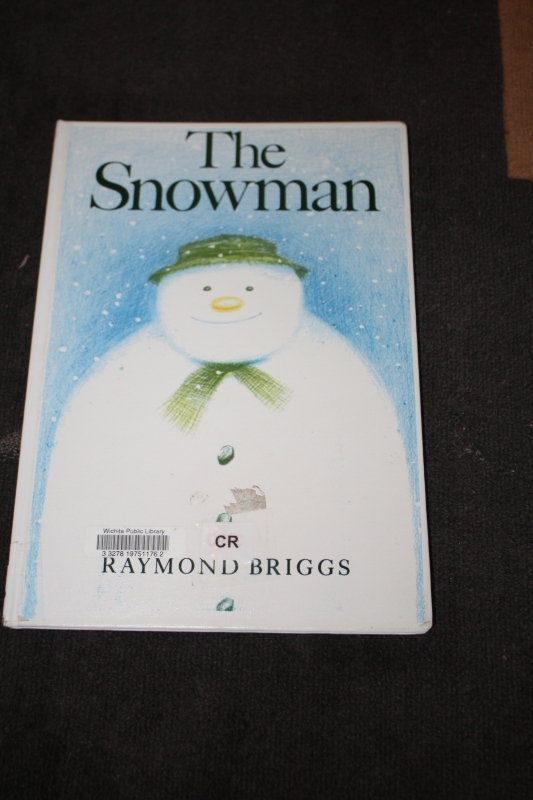
Cover art for "The Snowman"

The Snowman illustrated by Raymond Briggs

Remember how I don’t like wordless books? I really need to revise that statement now that I’ve found Baby Animal Spots and Stripes, Suzie Lee’s Wave, and The White Book by Elisabetta Pica and Lorenzo Clerici. The Snowman also joins the ranks of spectacular wordless books. Illustrated with multiple cells per page, like a cartoon strip, The Snowman tells the story of a snowman who takes the little boy who created him on a spectacular adventure. There’s enough detail here that you don’t have to stretch to tell a slightly different tale each time – and there’s plenty for a child to look at to help them tell the story themselves.

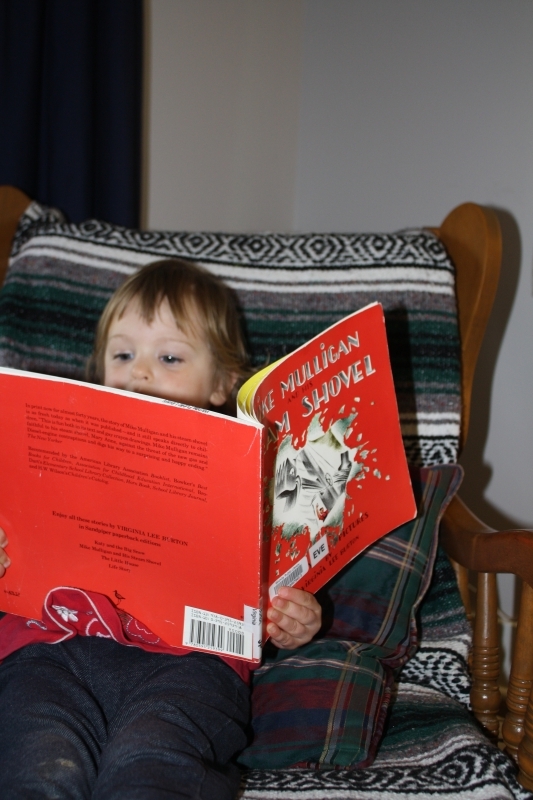
Tirzah Mae reads "Mike Mulligan and His Steam Shovel"

Mike Mulligan and His Steam Shovel written and illustrated by Virginia Lee Burton

I remember this book fondly from my childhood, remembering Mike and Mary Anne digging faster and faster but failing to give themselves an escape route. And I remember the solution: turning Mary Anne into the furnace for the new town hall. I don’t remember that the context was the obsolescence of the steam shovel (which was replaced by “gasoline diggers and electric diggers and diesel diggers”) or that the newly-hired City Hall janitor Mike Mulligan apparently only sits in the basement in a rocking chair telling stories. I suppose that’s for the best. I take heart from my own experience that children can enjoy stories, even ones that might have some political under- or over-tones, without internalizing all the issues they bring up. So I’ll keep reading this one to Tirzah Mae (and probably Louis too when he’s a bit older), although I might not make a priority of acquiring it for our home library.

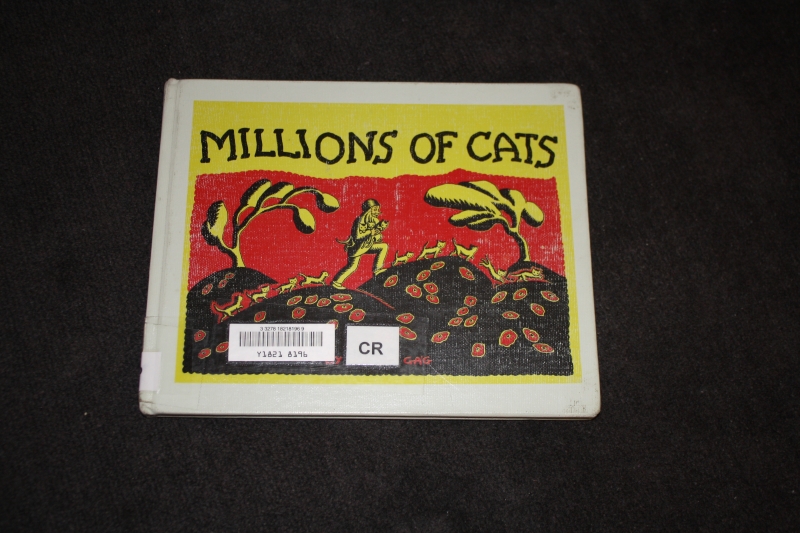
Cover art for "Millions of Cats"

Millions of Cats written and illustrated by Wanda Gág

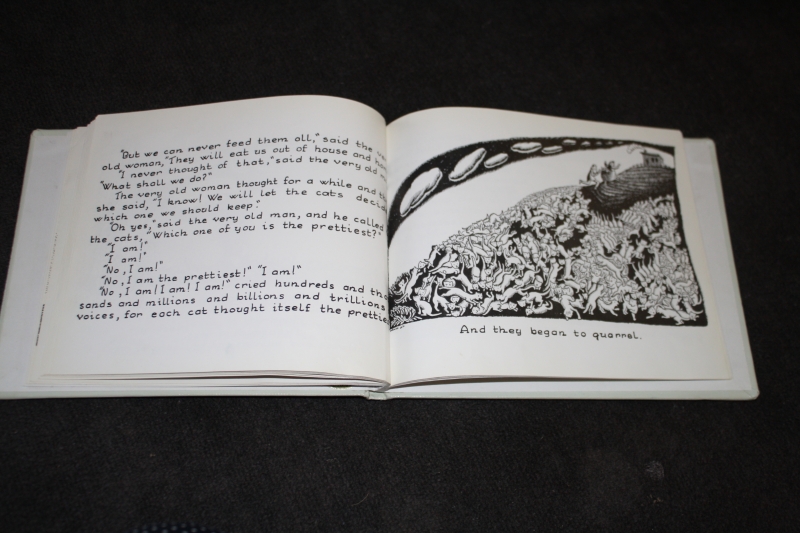
A very old man and a very old woman were lonely, so the very old man sets off at his wife’s behest to find them a cat to keep them company. He finds “hundreds of cats, thousands of cats, millions and billions and trillions of cats”, but can’t decide which to bring home. So, of course, he brings them all home. This is a great story, with just the right amount of repetition, a little bit of violence (’cause children’s books need a little violence here and there), and an understated moral. The black and white illustrations are a refreshing change from the bright modern cartoons currently so favored in children’s picture books.

From the inside of "Millions of Cats"

The Snowy Day written and illustrated by Ezra Jack Keats

It was sunny and bright with leaves on the trees and green grass covering the rain-slogged land when Tirzah Mae and I read Ezra Jack Keats’s The Snowy Day. I didn’t expect this story to resonate much with Tirzah Mae, since her only experience with snow was at Grandma and Grandpa’s when she was one. But resonate it did. Tirzah Mae was delighted to point out Peter on every page as he enjoyed the eponymous snowy day in the city. When we finished, she begged me to read it again and again. Finally, I left her to narrate the story herself, which she did with surprising detail, talking about Peter’s bath and how his mom took off his socks and “about the snowy day”. This was a definite hit – one I think I might check out next winter near when we travel north again (just in case we can catch a bit of snow ourselves!)

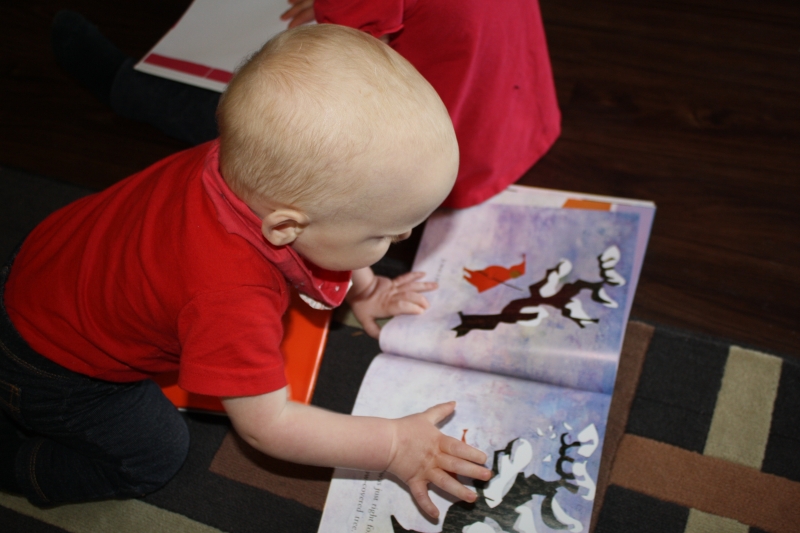
Louis reads "Snowy Day"

All in all, I’m glad we’re reading through these books together. While I’m not enamored with all of them, they are introducing me to books I have never read, some of which that are quite good. I’ll probably have another couple posts on these preschooler picture books (there are nine more) – and haven’t decided whether I’m going to write about the books for 5-8 year olds or not – maybe I should wait until I’m reading those with the kids?


Repeating my Father’s words

One of the most fascinating parts of being the mother of a verbal toddler is having a window into Tirzah Mae’s thoughts.

Her internal dialogue is external. She speaks whatever is on her mind.

When she’s debating whether to follow my instructions or not, she repeats my common refrain: “You have a choice” and congratulates herself with my own “good decision.”

And then there are the dogs. Tirzah Mae is terrified by dogs – and our next door neighbor has three or four large ones that bark often.

When Tirzah Mae sees or hears them, she often runs to me in fear pronouncing “Doggie woof-woof!”

I’ll remind her that the doggies are behind the fence, that they can’t hurt her. And I’ll let her hang on to my leg as long as it takes before she resumes whatever she was doing.

But after dozens or hundreds of reminders, Tirzah Mae has started reminding herself. She’ll be outside playing and the dogs will bark. Then I’ll hear her reminding herself “Behind the fence, can’t hurt you.”


Hearing her childlike trust in my pronouncements, hearing how she is constantly reminding herself of the truth that came (originally) from my lips, I am challenged.

I’m challenged because, while I’m not afraid of dogs, there are plenty of other things I’m afraid of. And I debate obedience more often than I care to admit.

Will I respond with the irritation I feel or with the soft answer I know God desires me to use? Will I dwell in the fear-world that says I’ll never have friends in this still-sometimes-strange-seeming-place or will I continue to reach out to people? Will I believe the inner voice that says I deserve [a bath, a plate of nachos, to not be touched for just a few minutes] or will I believe that serving my family is a privilege? Will I let myself be lured into self-pity over not having time to blog or will I trust that God has called me into this time and season and that it is good, even if I’m not blogging all about it?

Tirzah Mae’s internal dialogues spoken out loud challenge me to reframe my own internal dialogues.

Instead of running over my own words again and again and again, I would do better to repeat my Father’s words. He is trustworthy.

I need to remind myself of the truth of God’s word.

When I want to respond with irritation, I can remind myself of God’s patience with me. I can remind myself that I want my words to “bring grace to all that hear” (Eph 4:29). When I feel alone, I can remind myself that Jesus was rejected by those he came to serve – and I can remind myself that I have been given the “Helper, to be with [me] forever” (John 14:16). When I want to tell myself that I deserve my own comfort, I can remind myself of Christ who “though he was in the form of God, did not count equality with God a thing to be grasped, but emptied himself, by taking the form of a servant” (Phil 2:6-7). When I am tempted to self pity, I can remember that “for those who love God all things work together for good” that I might be “conformed to the image of his Son” (Rom 8:28-29).

Like Tirzah Mae, I can repeat my Father’s words, reframing my internal dialogues to conform to the truth as He has revealed it.

Lord, help me to do so, day by day.


Read-Aloud Roundup (March 2017)

We’ve been reading a fair number of board books this month, with a few regular picture books thrown in for good measure. Tirzah Mae and Louis have been enjoying the board books equally, while I’ve been keeping the regular picture books away from Louis because of his fondness for ripping and chewing :-)

I checked out Anita Silvey’s 100 Best Books for Children and we’re reading through her list. The first section was five board books, most of which we enjoyed and which I wrote about here.

Otherwise, we’ve read…

Babies on the Go written by Linda Ashman, illustrated by Jane Dyer

A gentle little tale of how different animal babies get around (via mama-power, of course!) We enjoyed the pictures of all the baby animals with their mamas, and the quietly rhyming text. Our favorites are the sloth “swinging in a belly sling” and the kangaroo “tucked inside a private sack” – since that’s the way Garcia babies get around too. I enjoy reading this aloud to Louis. Tirzah Mae loves listening along. And Louis loves eating it. Naturally.

Louis eats "Babies on the Go"

Madeline by Ludwig Bemelmans

Tirzah Mae must have decided she likes this classic tale, because she brought it to me and to grandma (who has been staying with us this last weekend while papa was gone with grandpa) to have us read it to her over and over and over again.

Tirzah Mae reads "Freight Train"

Baa, Baa Black Sheep
Old King Cole
and Twinkle, Twinkle Little Star written and illustrated by Iza Trapani

After our good success with Penny Dann’s Row, Row, Row Your Boat at the end of last year, I knew I was interested in some more books I could sing to Tirzah Mae. Somehow, I fortuitously happened upon the sheet in my reading log that recorded Iza Trapani’s picture books and decided to check a few out again. We enjoyed these singable variations on the songs, with multiple verses telling a story. For instance, in Old King Cole, King Cole wears himself out preparing for a fancy ball – and falls asleep for the ball itself. Everyone tries to wake him, with no success until Queen Cole brings out a good-smelling tart. That wakes him up right away, to everyone’s delight.

"Caps for Sale"

I intended to write more about the half dozen other board books we’ve been reading and re-reading (Sandra Boynton’s Snuggle Puppy is in the rotation again!) and the several dozen children’s picture books Tirzah Mae’s been cycling through (We’re currently loving Herve Tullet’s Press Here and Let’s Play), but it’s already the afternoon and I’ve got several things to do before our foster care class this evening – so you’ll get what I’ve already written – which happens to be the books we’ve loved that I’ve had to return to the library in the past month. Some of the books we’ve read but that I haven’t written about yet are included in the pics above :-)

Some recent favorites


We’re linking up with Amy’s Read Aloud Roundup to see what other parents (and kids) are reading aloud this month!


Nightstand (March 2017)

This March has felt like what Almanzo describes springtime to be like in Farmer Boy: busy from dawn until dusk with no time to sit except to race down some food. I had 10 cubic yards of compost delivered earlier this month and it’s been busy shoveling and building and planting. An herb bed built and filled with compost (thanks to my mother-in-law for the help!), extra compost added to one of my raised beds, eleven trees planted. Raking the old dead grass off the “pasture” (actually the septic field).

When I have had opportunity to sit down, I have done some reading – but it’s almost entirely been children’s picture books read to Tirzah Mae and Louis. So I’ve got another spare list this month (lots of in-progress books, only two finished).

Books for Loving:

  • Church History in Plain Language by Bruce L. Shelley (In Progress)
    I’ve gotten a few more chapters read in my church history studies – and am SO thankful that I scheduled myself a “catch up” month every fourth month. I’m going to need it (especially since every section gets longer!) I’m currently looking at the period between Constantine and the Middle Ages, a time ripe with creeds and controversies.
  • Getting to Know the Church Fathers by Bryan Litfin (In Progress)
    I’m clearly abusing my church library’s lack of fines for not returning books on time – I’ve checked this one out several times, and currently have it out over a month longer than the three week lending period. But as far as readable mini-biographies of the church fathers go, this is excellent. I’ve resolved to read the last three chapters this week so I can return it next Sunday. (End the abuse!)

Books for Growing:

  • Your Time-Starved Marriage by Les and Leslie Parrott (In Progress)
    The Doctors Parrott make good on their promise of short, readable chapters. I can read a chapter in just 7 minutes (while doing something else, because I rarely simply read these days.) In some ways I think I started reading this just a moment too late, since Daniel and I had already come up with some action steps to deal with the “now that we have two kids, neither of whom sleep predictably, it feels like we never spend any time together-together” problem. But what they’ve said already has resonated with me – and I’m about to get into the nitty-gritty part, so I’m hopeful they’ll have some useful tips for making intentional time together.
  • Success as a Foster Parent by the National Foster Parent Association with Rachel Greene Baldino (In Progress)
    Reading this has slowed to a crawl thanks to all the reading and homework we have for our foster care class – but I’m glad for the start I had on this before our class, which has meant that our classwork is more familiar. This is a great introduction to the process for someone who’s interested in fostering but who wants to learn a little about it before they start juggling schedules to actually get certified.
  • Growing Family Fruit and Nut Trees by Marian Van Atta with Shirley Wagner (In Progress)
    We planted five apple trees this month and are hoping to have a plan for the rest of the orchard by fall so we can put everything else in first thing next spring. So I’m reading up on fruit trees. This particular book is somewhat dated but ended up being my first pick to read right through because it doesn’t attempt to be comprehensive, which means that it’s quite easy to read. I read the first hundred pages in moments snatched here and there the day we planted our apple trees (read: when going to the bathroom or taking a break to breastfeed Louis). The remaining 20 pages are waiting for…someday soon, probably. One of the most interesting features of this book is that the author writes from Florida, so she discusses plenty of trees I’d never thought of planting. I spent my early teen years reading homestead memoirs from back-to-the-land folks in Maine and envied their ability to grow their own maple syrup. Now I’ve had a chance to envy Ms. Van Atta’s ability to grown her own oranges and grapefruits!

Books for Knowing:

  • The Almost Nearly Perfect People by Michael Booth (In Progress)
    You’ve heard of how the Scandinavian countries are some sort of utopia, right? (Unless you read conservatives, then you might be pretty skeptical of that claim.) Anyhow, Booth writes about Scandinavia (where he’s lived for some time, having married a Dane) in this semi-journalistic, semi-memoirish book. In general, I’m enjoying reading this, although Booth jumps here and there and everywhere without any obvious thesis or point even to the individual chapters, much less to the entire book.
  • The Place Where Hell Bubbled Up: A history of the First National Park by David A. Clary
    A short (64 page) little book filled with old-timey black and white photos from the first days of Yellowstone National Park along with the tale of its discovery and early status as a national park (approximately until the introduction of automobiles.) I enjoyed reading this in preparation for our family trip to Yellowstone this summer.

Books for Enjoying:

  • The Book of Three by Lloyd Alexander
    Daniel and I have been trying to complete the “Light Reader” level for the 2017 Christian Reading Challenge put out by Tim Challies. One of the book categories is “a book for children or teens” and I’ve been intending to read the Chronicles of Prydain since Amy’s husband Mike recommended it when I asked for advice finding a completed series that would be similar to Brandon Sanderson’s work (Daniel is a fan of Sanderson, but neither Daniel and I are super fond of reading series that haven’t been completed – and Sanderson has LOTS of those.) Anyway, we read this first book in the series and I certainly enjoyed it enough to continue on with the series. It’s a relatively lighthearted children’s fantasy with plenty of adventure and not-too-heavy-handed-learning-opportunities.

Don’t forget to drop by 5 Minutes 4 Books to see what others are reading this month!

What's on Your Nightstand?


Reading board books from 100 Best Books for Children by Anita Silvey

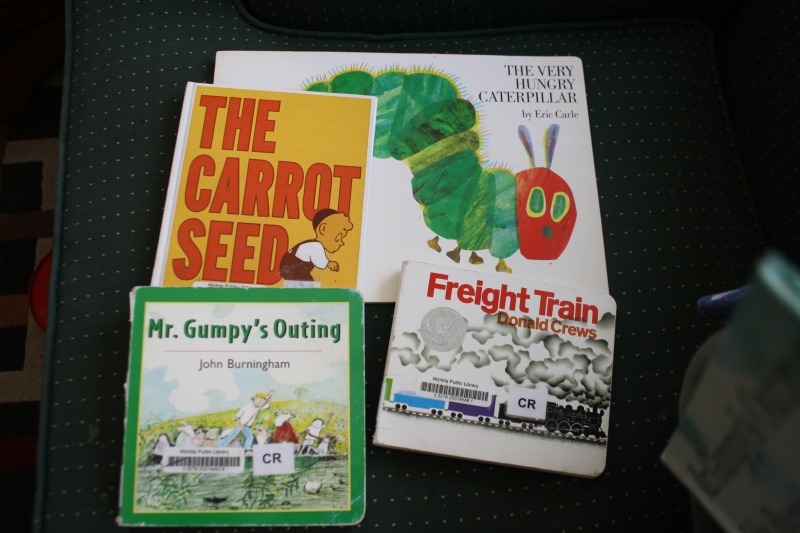
Anita Silvey has selected what she considers the 100 best books for children, from birth to teenage years. The first five books Silvey selected for her collection are board books. We’ve checked them out of the library and enjoyed reading them through together – although we enjoyed some significantly more than others :-)

Goodnight Moon written by Margaret Wise Brown, illustrated by Clement Hurd
I know people love this book. But I just can’t bring myself to even like it. I read this to myself to say that I did, but elected to not read it to my children (lest they like it and I end up stuck reading it aloud ad nauseum.

Board books

Mr. Gumpy’s Outing written and illustrated by John Burningham
Not long after reading about this title in Silvey’s book, I chanced upon a paperback copy at a library book sale and snapped it up. I enjoyed the gentle story of the children and the various animals that joined Mr. Gumpy on his outing (after having been warned not to horse around) – but I thought the illustrations were rather lacking. Then I happened upon the board book version at the library and picked it up to read to Louis – and the illustrations were much better. Once I compared the two, I realized that the colors do in fact show up a little differently, but the main difference was that I had been reading our copy to Tirzah Mae at naptime under a dim lamp in her room – and was reading the board book to Louis in the quite bright library!

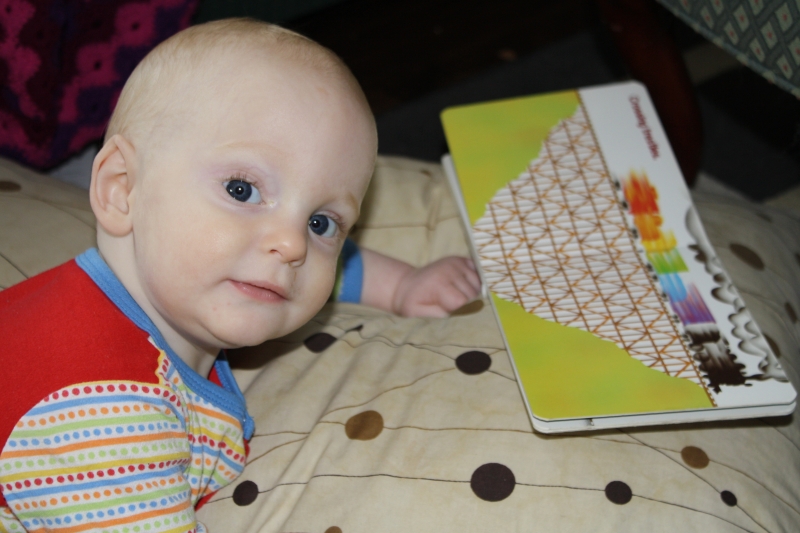
Louis reads "Freight Train"

The Very Hungry Caterpillar written and illustrated by Eric Carle
I expected Tirzah Mae to enjoy this more than she did, but I’m wondering if maybe it’s a timing issue. I enjoy The Very Hungry Caterpillar and think we’ll probably pull out the copy we own later on when Tirzah Mae is showing interest in numbers, or when it’s monarch time and we’re inundated with caterpillars feasting on our milkweed.

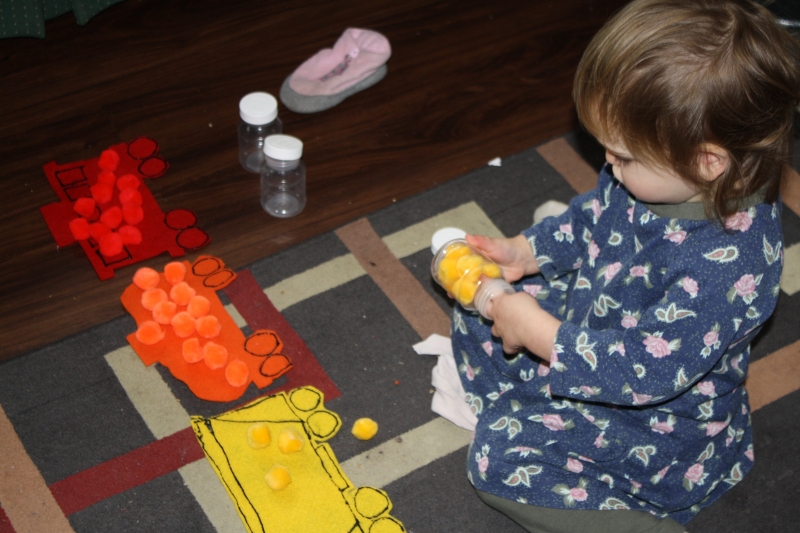
Tirzah Mae plays with her "Freight Train" activity

Freight Train written and illustrated by Donald Crews
This was already a favorite of Tirzah Mae’s and mine – and we were thrilled to check it out of the library again. We’ve been reading it and doing activities with it and reading it again. It’s one of a selection of books Tirzah Mae has memorized and “reads” to herself frequently. This definitely deserves a place on any such list.

Carrot Seed

The Carrot Seed by Ruth Krauss, illustrated by Crockett Johnson
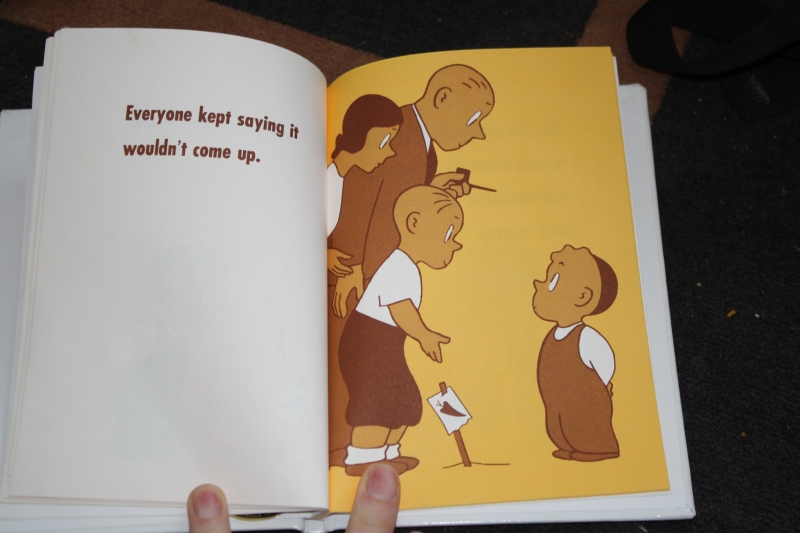
When I first read this book’s spare text, I wasn’t sure what to think or whether I liked it. Silvey describes this book as having a “believe in yourself” message – a message I happen to despise. But that isn’t really the message. The message is about the benefits of hard work and patience even when others doubt there will be any outcome. That’s a message I can get behind. Besides, I had to learn to like this book since Tirzah Mae likes it rather a lot. She loves the simplicity of the text and illustrations – and it can’t hurt that all the illustrations are orange, her favorite color.


Snapshot: Louis drives

We were heading to the “Forum on Race” that our church is co-hosting this evening with another church in town when our electronics started flashing off and on.

We stopped in a park lot to see if we could figure out what was going on – and couldn’t restart the car.

So while we’re waiting for Triple A to show up, Louis is practicing his driving.

Louis drives


On this women’s day

Facebook tells me this is Women’s Day. My Feedly newsreader tells me it is the “Day without Women” – where women go on strike to demand recognition of their disenfranchisement.

On this Women’s Day, having just struggled over the question of “how do you divide chores in your household” in our foster care packet, I want to do the opposite of going on strike.

Because while some women may want to complain that their work is underpaid and underappreciated, I do not.

I have the gig I’ve always dreamed of.


My husband is gone from our home eight hours a day, working for his company. He enjoys his work, yes, but he also works because he’s our breadwinner. He trades forty hours a week for money. Money that we use to pay our mortgage, buy our food, keep the lights on and the heat or air conditioner running.

I’m at home. I read to our children, sing songs with them, dance about with them. I change their diapers, I feed them meals and snacks, I breastfeed them whenever I need to (without having to hook myself up to a pump.)

I’m at home. I make the meals, wash the dishes, sweep the floor (sometimes.) I rinse the diapers, wash the laundry, fold it and put it away. I organize and rearrange and decorate.

I buy or make clothes for our children. I mend the clothes that I or my husband or our children tear. I clothe the children in the morning.

This is what I’ve always wanted to do.


On this women’s day, I want women and men to receive equal pay for equal work. I want women to be valued in their workplaces.

But even more, I want women to have the freedom to make the choices I have.

My dream is that every mother would be married to a man who recognizes the value she provides in raising their children, who works hard to give her the option of staying at home should she desire that.

My dream is to live in a world where two incomes are an option, not a necessity – where value isn’t determined by how much money a person makes or how many possessions they have. My dream is that there’d be an end to the arms race of ever bigger houses and cars and vacations, where women could opt out without fearing their children would fall behind.

My dream is that every woman can do what they’ve always dreamed of, whether or not that includes making money.


And on this women’s day, I’m going to keep doing what I do every hour of every day. I’m going to keep doing this job I’ve always dreamed of.