A Lamp’s Tale

Snap, crackle, pop.

The sound wasn’t coming from my breakfast cereal.

It, along with a brief flash of light, was coming from my bedside lamp.

I rolled over, flicked the switch toggle back and forth to confirm. The lightbulb was burned out.

Books in Progress

Periodically through the next several weeks, I would reach over to turn the lamp on, only to rediscover that the lightbulb was burned out. Since I generally only turn the light on to read in bed, I generally don’t feel like changing a lightbulb just then. So I’d reach across the bed to Daniel’s nightstand and turn on his bedside lamp.

Finally, one lunchtime, I decided to actually change the bulb.

I pulled out my step-stool, climbed to the cabinet of lightbulbs, dug through the lightbulbs for prospective candidates. My bedside lamp has to have a low wattage, since I don’t want my body to think it’s daytime–and the bulb has to be able to handle the little wire clip that holds the shade on (something CFCs have a hard time doing.) After a bit of digging, I found two prospects: a CFC that might not work with the shade and an incandescent bulb that might be too high wattage.

I took off the shade, unscrewed the lightbulb. I screwed on the new CFC and flipped the switch.

Nothing.

Darn it all. I knew I should have been labeling those CFC that I was putting back in boxes until I could dispose of them at the Hazardous Waste place.

I unscrewed the CFC, returned it to its box, and screwed in the new incandescent bulb.

I switched the light on–and got nothing again.

Double darn it all.

Whatever caused the snap, crackle, and pop must have destroyed the lamp’s wiring. I like the lamp, it matches my blueware. I’ll have to rewire it some day–but for now, I guess I’ll just replace it.

I reached down to unplug the lamp–

and discovered that it was already unplugged.

That snap, crackle, pop?

My lamp coming unplugged months ago.

Yeah. Welcome to my life :-)


Thankful Thursday (8/29/2013)

Thankful Thursday banner

This week I’m thankful…

…for an unnecessary wake up call
Daniel prays with some other men early every Thursday morning. Two weeks ago, I feel asleep after he left and slept right through until I should have been at work. Last week, Daniel called me about 45 minutes before I had to leave for week–and I was glad to announce that I was up and just out of the bath!

…for help with Friday’s chili
I was behind on Friday, way behind. I had to get to work and the chili had to go in the crockpot. When time became desperate Daniel gave me orders. No touching the chili until I was all ready for work–including having finished breakfast. Which meant Daniel chopped the onion and browned the hamburger and added the seasonings to the crockpot. What a blessed woman I am, to have a husband who cares for me so.

…a dad who wants his daughter to explore the wide variety of careers available for women
I was surprised but pleased when a dad asked me a favor after I’d finished certifying his youngest daughter. He wants his eldest daughter to learn more about the types of fields she could go into someday. Could I describe my job and my education for her? I loved being able to describe my career path–but also to encourage her to read widely, to explore a variety of interests, and to shadow and volunteer wherever she has a chance.

a niece and nephew to play with my toys
Six-year-old E and four-year-old P stayed the night with us this last Friday while their parents were at a youth leader’s retreat in town. P and I dressed Addy, E and Daniel played with my cap gun. We played UNO and Connect Four and Memory. P put together the 50 states puzzle I picked up a couple years back at a used store. E found volume 11 of Childcraft, the same volume I pored over years ago as a visitor at the across-the-street neighbor’s house. He had seen my cardboard collection downstairs and asked if I had crayons, tape, scissors, and typing paper so he could make the foot-shaped fan he saw displayed on the pages. I was glad to assist him in completing one of those projects I dreamed of doing so often as a child myself.

…a friend
We met at a Sunday evening small group when I first moved here but didn’t really talk that much. When the small group ended in May, we parted ways. Then, about a month ago, Alexa texted me to ask if I wanted to hang out sometime. We took a walk and talked–and scheduled a date for tea the next week. This week, we made (and carried out) plans for Alexa and her husband (formerly Daniel’s roommate) to come over for dinner with Daniel and I. After a long stretch of feeling pretty lonely in this new town, it’s so wonderful to have a friend.

…a husband who serves me
Some might roll their eyes at how often Daniel appears on my “thankfulness” lists. They might presume that this is merely the rose-colored glasses of a newlywed. But when I read in Luke 22 how Jesus says that the greatest among you is the one who serves, and when I see that He reminds the disciples that He (Christ) is among them as one who serves, I thank God for giving me a husband who models Christ-like service. Just this week, Daniel has cleaned for me, has done dishes, has gone grocery shopping, has taken the trash to the curb, has picked me up food, has given me wake-up calls, has prayed for me, has comforted me, has let me sleep, has valued my input. I could never deserve such a great husband–He is a daily EOG (Evidence of [God’s] Grace).

I am so thankful to God, from whose hand all these things come, that He has called me according to His purposes and promised that all things (whether the nice things I listed above or the difficult things I have not listed) work together for my good–so that He might conform me to the image of His Son.

“For from Him and through Him and to Him are all things. To Him be glory forever. Amen.”
~Romans 11:36 (ESV)


Nightstand (August 2013)

After writing last month’s Nightstand lamenting how few books I’m reading these days, I promptly finished Flowers for Algernon by Daniel Keyes the next day. Hooray! My spirits were lifted and I am optimistic again.

That Daniel drove the entire way to Wisconsin and back gave me plenty of time to do additional reading, so this month is looking pretty good.

This month, I read:

  • The Fertility Diet by Jorge Chavarro and Walter C. Willett with Patrick J. Skerrett
    No, I am not trying to get pregnant. But seriously, when a dietitian sees a title like this from McGraw-Hill and Harvard Medical Press she just has to take a look. It turned out to be an intriguing look at what the Nurse’s Health Study reveals about diet and ovulatory infertility. Certain parts (the recommendation to eat full-fat dairy, in particular) may be a bit controversial, but the recommendations are generally science-based (although cohort studies are necessarily difficult at establishing causation) and probably useful for anyone struggling with ovulatory infertility. Because many of the recommendations work through managing insulin and adrogen production, this general diet may also be useful for women struggling with the effects of PCOS. I’d love to see some prospective studies using this diet for the treatment of infertility.
  • Flowers for Algernon by Daniel Keyes
    This was our second book club read. I put the title in the hat after reading Heather’s review and was a little surprised that we ended up drawing it. This book, about a mentally handicapped man who was chosen for an experiment to “make him smart”, turned out to be an excellent choice with plenty of opportunity for discussion. Read Heather’s review for the caveat emptors, but I do still generally recommend it as a good and thought provoking book.
  • The Longevity Project by Friedman and Martin
    I read this based on an article I read about it online. It follows an interesting prospective study of children from the twenties who were followed throughout their lives–and looks for predictors of long life. It looks like longevity isn’t quite so straightforward as we think–and there are multiple paths to long life. For instance, neurotic men don’t generally live a long time, but when wives die before their husbands, neurotic men are more likely to live longer than non-neurotic men. So you can’t necessarily say “neurotic is good” or “neurotic is bad”. The information was interesting, but the presentation was pretty dry. I don’t know that I’d recommend it for the casual reader.
  • Nurture Shock by Po Bronson and Ashley Merryman
    A look at what the science says about child-rearing (which isn’t always intuitive). I found this fascinating enough that I’m writing up notes on it for future reference (and, yes, you’ll probably be subjected to those notes in the form of blog posts–I apologize in advance.) Practically everyone read this before me and I know I saw it mentioned on half a dozen hundred blogs–but I can’t seem to find where I bookmarked any of them. So, if you reviewed this book you probably contributed to my reading of it. Please consider yourself thanked.
  • The Thyroid Sourcebook for Women by Sara Rosenthal
    It was a decent coverage of thyroid disease, but not my favorite resource. Meh.
  • The Ultimate Volumetrics Diet by Barbara Rolls
    I read this while I was an undergraduate (before it was “The Ultimate”) and loved the science-based recommendations. I use Volumetrics-type concepts daily in my counseling. This time, I spent a week following the Volumetrics recipes, to see how the official “diet” works on an every day level. The good news is that the recipes are varied and relatively easy to prepare. The bad news is, like my husband said, “They’re okay, but I like your cooking better.” I think the recipes suffer a bit taste-wise from being so low-fat. Adding in some good unsaturated fats in moderation will increase the caloric density of the foods (meaning that they won’t promote weight loss as quickly)–but will probably greatly contribute to the palatability of the recipes.
  • Why We Get Fat by Gary Taubes
    Someday I’m going to review this in full. For now, I’ll say that it has been a source of argument between me and my husband and has almost reduced both of us to tears. Taubes seems determined to keep nutrition professionals from taking him seriously (for the matter, determined to make nutrition professionals angry at him) in the first half of the book before getting to his actual thesis in the second half. After numerous starts and not a few angry rants, I finally got to the section including Taubes’ thesis and found that it is a reasonable hypothesis to explain excess adiposity (the deposition of excess body fat vs. lean tissue). That being said, don’t read until you’ve read my full review lest you learn from Taubes that you shouldn’t believe a word I say.

Also Reading this Month:

  • Daniel Deronda by George Eliot
    I got it for the Reading to Know Bookclub. I read 1 chapter. I got busy with other things. Bleh! I still think I’ll plug through, but I’m bummed that I’m yet again slacking with the RTK club.
  • Here I Stand: A Life of Martin Luther by Roland Bainton
    Continuing from previous months…this is a very interesting look at one of the leading Reformation figures.
  • Kneeknock Rise by Natalie Babbit
    Just started and not far enough along to have an opinion. I generally like Babbitt, though, and Carrie recommended this highly.
  • Nothing Daunted by Dorothy Wickenden
    This month’s book club pick; it tells the story of two college-educated society women of the 1910s who traveled to the “uncivilized” Western slope of the Rockies to teach school. It took a while to get into it (the author started telling backstory before I was invested in the characters, which was a bit distracting), but I’m enjoying it now–and need to finish it quickly to discuss on Thursday!

Don’t forget to drop by 5 Minutes 4 Books to see what others are reading this month!

What's on Your Nightstand?


Water-Rant

The Sedgwick County health-related organizations are doing a wellness challenge called “Chug a Jug” this month.

The goal is to have each participating employee meet their personal goal for water consumption in a day–with a suggested goal of 64 oz (a half gallon) of water per day.

I’m participating, but I’m complaining about it to my husband all the time.

Why am I complaining?

*****Begin Rant*****

Because it’s just wrong, just plain wrong.

Okay, maybe not that bad.

The health goal is ostensibly to have people replace caloric beverages with water–which is generally a good choice–but the execution leaves much to be desired (in my humble opinion.)

First, there’s the jug aspect. The challenge suggests 64 oz per day, the “8 glasses” we all grew up hearing. Problem is, there really isn’t any science that says 8 glasses is the optimum amount of water for even the average adult. That’s actually a pretty arbitrary number. For children, that number could actually be dangerous if kids tried drinking that much too quickly. (And yes, the challenge does let employees enroll their family members.)

Second, there’s the water aspect. Most of the benefits of water that are spread through e-mailed reminders are actually not benefits of water (that is, plain water) per se, but of fluid in general. Fact is, our bodies are remarkably good at getting water from all the fluids and even foods that we eat. When we drink juice, Koolaid, sports drinks, soda, coffee, milk, and tea–our body gets water. We don’t have to be drinking it plain from a tap or a bottle to obtain the benefits of water.

Third, there’s the two of them together.

Let me explain what I mean.

Assume I require 2000 calories per day. If I look at the USDA’s My Plate, I should be getting 3 cups of dairy in a day. That’s 24 oz, which (assuming that the 64 oz guideline is correct–which it isn’t necessarily) leaves me 40 oz of fluid for the day. Assume I decide to get 1/2 cup of my 2 cups of fruit from fruit juice. That leaves me 36 oz of fluid in the day. Now, say I like to wake up with a 16 oz coffee (without sugar or with an artificial sweetener). That would leave me with 20 oz of fluid in my daily requirement. If I were to drink 64 oz of water on top of that, I would be getting a whopping 108 oz of water (just 2 1/2 cups less than a gallon) in a day–which is more than is necessary by any estimation.

In other words, the challenge is silly.

*****End Rant*****


Praying for a Meaningless Life

Daniel and I have a friend who grew up in the faith but has since abandoned it.

Our friend tried Christianity and it didn’t work–or so our friend says.

Since the day I heard of our friend’s lack of faith, I have had one prayer:

Make his life meaningless.

Our friend is young and energetic. He can do whatever he wants. He is free to explore the world, to enjoy every pleasure it has to offer.

I have one prayer:

Make his life pleasureless.

I pray that he would ever have a longing unfulfilled, that he would always come to the end of a pursuit empty, that his wanderings would never satisfy his wanderlust.

I pray that his travels would end like the Preacher’s and that he would come to the same conclusion.

“Vanity of vanities, says the Preacher; all is vanity.”
~Ecclesiastes 12:8

I pray that all of life would seem worthless, meaningless, joyless–until one day our friend would come to the end of himself and discover that meaning, worth, and joy can only be found in doing precisely what he was made to do: in bringing glory to God.

“The end of the matter; all has been heard. Fear God and keep his commandments, for this is the whole duty of man.”
~Ecclesiastes 12:13

Every day, I pray this prayer…

and I am reminded that I too sometimes need a meaningless life

I too need to feel the gnawing ache whenever my heart is not fixed on Christ.

May I never find meaning, purpose, or pleasure apart from Him.


Wedding Whens and Wheres, Part 2

In my previous post about wedding whens and wheres, I realize that I missed two parts. The time of day for our wedding and the place for our reception.

I don’t think determining the time of day for our wedding was particularly difficult for us. I grew up attending my aunts’ and uncles’ wedding (my mom was the second married of 12 children and I attended the weddings of at least 7 aunts and uncles during my childhood years)–and our family pattern was an early afternoon wedding with a reception immediately following in the church fellowship hall. Daytime weddings are traditional for our family.

Furthermore, as a college student and after, I’d attended many an evening wedding and mused at how worn out the bride and groom must be when they finally reach their honeymoon (or overnight) location. I was NOT eager to have my first night with my groom be one of exhausted irritability.

We chose a 1:30 wedding with a (short) reception immediately following.

20130309_RebekahDaniel_342

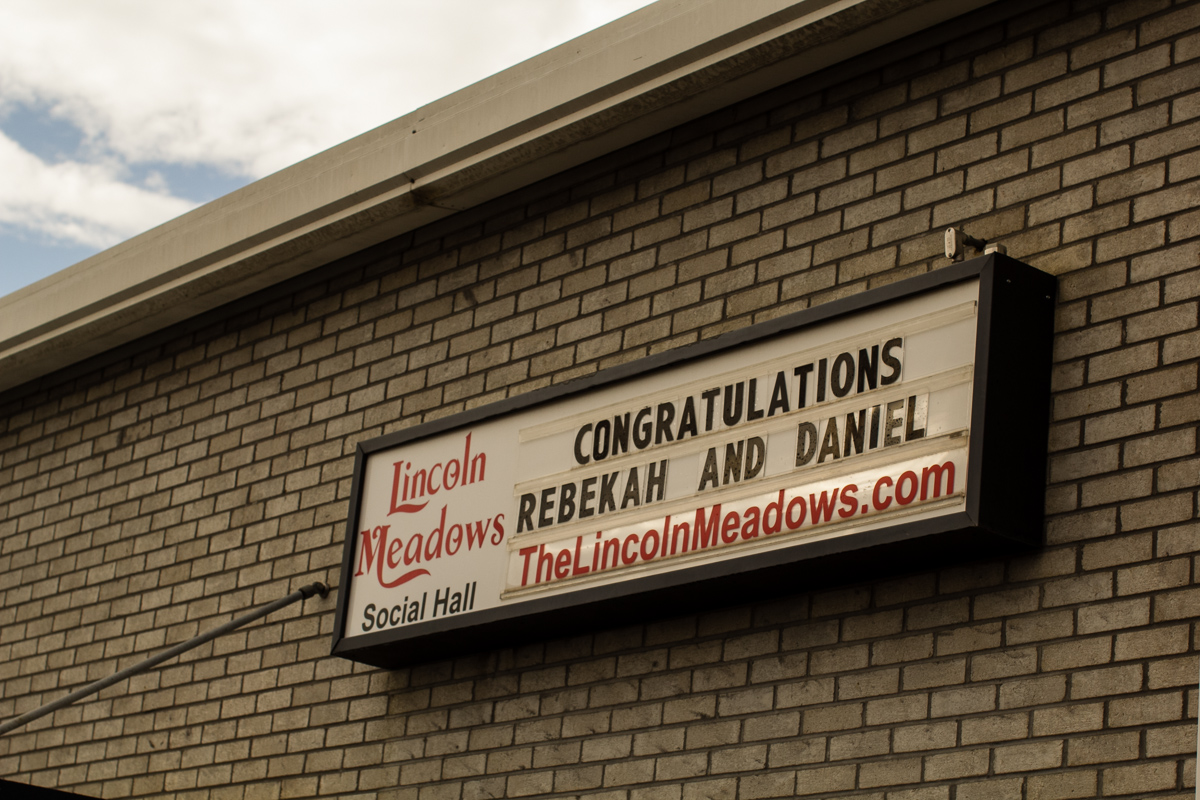
Lincoln Meadows was fairly nondescript–and we didn’t do much to fancy it up, just flowers on the tables. But it fit everyone and let us cater ourselves–which was pretty much what I was looking for.

Once we had our ceremony site in place, we had to choose a site for our wedding reception. We couldn’t have it in the church fellowship hall, since the hall can only comfortably seat maybe 80 people. Variable weather in Nebraska in March meant outdoors wasn’t an option–so we had to find ourselves a reception hall.

We had some definite constraints:

  • The hall had to be available on March 9
  • The hall had to seat at least two hundred people
  • The hall had to have space for two hundred people to PARK (since our wedding was on the same day that Lincoln was hosting Nebraska’s Boys State basketball tournament)
  • The hall had to let us self-cater or, at the very least, allow us to bring in an outside caterer (because I’m uber-cheap)

I did internet searches for places, called for availability, and was left with exactly two potential places–one of which seemed definitely the better pick.

Since I wasn’t in Lincoln, I phoned the hall to figure out logistics and then sent my mom down to scope out the hall and reserve it.

Sign on the Reception Hall

When my mom went to the hall the morning of our wedding, the sign still bore the names of the previous couple. She contacted the hall, and by the time we got there the names had been changed

And that was that.

What: Wedding
When: 1:30 pm Saturday March 9, 2013
Where: Lincoln Christian Fellowship and Lincoln Meadows Social Hall

I made it down to Lincoln one weekend and my mom took me out to the place to peek in the windows–but otherwise, the first time I saw our reception location was when I arrived there to decorate the day before the wedding.

Despite all that, it turned out great. The only downside had nothing at all to do with the reception site and everything to do with my own lack of preparation.

I had mentioned the need for some sort of sound system in conversations with my folks but hadn’t followed up on it or made definite arrangements to have a microphone and speakers so our host could direct the reception activities more easily.

20130309_RebekahDaniel_423

Daniel’s best man toasts us near the bar. (I tried to see if they’d let us go completely without a bar, but that wasn’t an option. So a bartender was there but we didn’t really advertise that it was available–which meant they maybe made a half dozen sales, max. Eh :-P)

WICBits: Contaminated Food Risk Code

Nutrition Risk Factor:
Consuming potentially contaminated foods

What it means:
Consuming potentially contaminated foods includes

  • consumption of cold hot dogs, lunch meat, or deli meat
  • consuming tuna or salmon more than two times a week
  • consuming raw milk or soft cheeses made with unpasteurized milks
  • consuming sprouts

Why it’s a risk:

  • Tuna or salmon may contain mercury, which is toxic in sufficient amounts
  • Cold hot dogs, lunch meats, or deli meats may contain listeria, which can cause miscarriage or fetal abnormalities when consumed by pregnant women or can cause brain or blood infections when consumed by children under the age of 12
  • Raw milk and soft cheeses made with unpasteurized milk may also contain listeria
  • Sprouts put pregnant women and young children at risk for Salmonella or e-coli infections, which can be even more dangerous for these populations because of their weakened immune systems

What I might educate/counsel regarding:

  • Eat fish, including tuna and salmon, but no more than twice a week
  • Heat hot dogs, lunch meat, ham, and other deli meats to steaming before eating. This can be done in the microwave, on the stovetop (just fry both sides of lunch meat in a skillet, no need to add fat), or can be done by making a grilled sandwich. At the sub store, ask to have your meat toasted in their little oven thing.
  • Purchase pasteurized milk and soft cheeses (feta, Brie, blue, queso fresco, queso blanco, etc.) made with pasteurized milk
  • Avoid sprouts during pregnancy and don’t serve to children. If you must have them, heat them to steaming before eating.

Generally, the most surprising information for my clients is that deli meats carry a risk of listeria. Clients know to heat hot dogs, but are shocked to learn that cold deli meats and lunch meats carry the same risks.

Occasionally, I’ll have parents say they’ve been eating cold deli meats for forever, or been feeding their children cold deli meats for forever and haven’t had a problem. I ate cold deli meats as a child and never got listeriosis. Truth is, listeriosis is relatively uncommon–but when someone with a weakened immune system gets it (for example, a child, a pregnant woman, or an elderly person), it can have devastating effects. So, even though the event we’re trying to avoid is rare, we still recommend heating. It’s not THAT hard, and if it does keep you from Listeria, it makes a big difference.


Nightstand (July 2013)

Someday, I’m going to get used to how moving and marriage has changed my reading habits and my reading volume–but for now, I end up a little depressed every time I write up my Nightstand post when I realize just how little I’ve read.

And then I get a little depressed that I’m boring you again with my laments of how little reading I’ve done.

Sorry.

Maybe I’ll have a better blurb next month.

For now, I’m busy retiling my kitchen floor, leaving me with little time for recreational reading. So, without further ado…my Nightstand.

This month, I read:

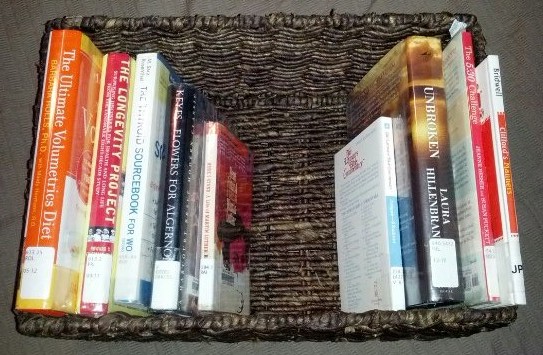
  • The Layman’s Bible Commentary: Judges, Ruth, 1 Samuel, 2 Samuel by Eric C. Rust
    The commentator has little regard for Biblical authority and undermines the doctrines of inspiration and inerrancy on almost every page. I do not recommend this commentary. See my full review for examples.
  • Unbroken by Laura Hillenbrand
    If you didn’t read this back in 2011-2012 when all the other Nightstand-ers were raving about it, you should definitely go out and get yourself a copy and start reading now. This is a fantastic true story set primarily during World War II. Read my full review for a mostly-incoherent fan-splat.
  • The 5:30 Challenge: 5 ingredients, 30 minutes, dinner on the table by Jeanne Besser
    I cooked up four or five recipes for this book and really enjoyed them. Perhaps my only complaint is that some of the ingredients were “specialty” type ingredients that I don’t normally keep on hand. Otherwise, both the concept and the execution are great.
  • Clifford’s Manners by Norman Bridwell

What's on My Nightstand

Continuing from Last Month:

  • Bondage of the Will by Martin Luther
  • The Thyroid Sourcebook for Women by Sara Rosenthal

New Additions this Month:

  • Flowers for Algernon by Daniel Keyes
  • Here I Stand: A Life of Martin Luther by Roland Bainton
  • The Longevity Project by Friedman and Martin
  • The Ultimate Volumetrics Diet by Barbara Rolls

Don’t forget to drop by 5 Minutes 4 Books to see what others are reading this month!

What's on Your Nightstand?


WICbits: What does a WIC appointment look like?

When a WIC applicant walks into our doors, they’ll be asked to sign in at a book in the lobby and then wait for the first available staff person to check them in.

Check-in includes verifying eligibility by evaluating proof of identity, proof of residency, and proof of household income. The check-in staff will tell the applicant about the WIC program, including their rights and responsibilities as a WIC participant. Check-in staff will also assess the applicant’s use of other programs and will make referrals as necessary.

Once the client has been checked in, they will wait for the medical data staff who will weigh and measure them and do a finger-stick for hemoglobin.

Next, the client will see a professional (either an Registered Dietitian or a Registered Nurse), who will assign risk codes based on a diet questionnaire and interview, will provide appropriate education and assist the client in setting goals for improvement, and will tailor and print checks for the food package. Professionals also provide referrals as needed.

In Kansas at least, most WIC clients (that is, children from 1-5) are re-certified every 6 months–which means they have to go through the entire process including verifying eligibility again. In between recertification visits (about once every 3 months), clients have to come in for at least one nutrition education meeting.

Low risk clients have an option of completing an online educational module or reading an educational poster in our facility for their nutrition education meeting. High risk clients (for example, obese children or women with a low Hgb) have to see a dietitian for their nutrition education meeting.

My job, then, is to evaluate clients using a combination of questionnaire and interview, assess their risk factors, certify them for WIC, counsel them regarding their risks and give them the needed education to make changes, and assist them in setting goals for themselves and/or their children.

I love it.

I spend the majority of my time dealing directly with mothers and fathers, helping them obtain the necessary knowledge and skills to feed their families well. Sometimes I get to do breastfeeding counseling with prenatal women, sometimes I get to talk to postpartum women about restoring their nutrient balances. Sometimes I get to help parents learn how to introduce solids to their babies. Sometimes I help them understand how to help their picky children learn to accept a greater variety of foods.

I get to talk a little child psychology and parenting techniques, a little physiology, a little cooking, a little child development. And, of course, I throw in a little economics while I’m at it.

It’s wonderful. I love what I do.


Book Review: “The Layman’s Bible Commentary: Judges, Ruth, 1 Samuel, 2 Samuel”

In last April’s Nightstand post, I gave a short review of The Layman’s Bible Commentary: Acts of the Apostles by Albert C. Winn. I spoke positively of it as a beginner’s commentary, restating and clarifying the text with bits of historical commentary throughout. While the mature believer with a lot of background already may not find it useful, it is a good source for the new believer or one with little Biblical background.

Recently, I picked up another volume in The Layman’s Bible Commentary series, this time written by Eric C. Rust on Judges through 2 Samuel. I started reading in 1 Samuel, in conjunction with my daily Bible reading, and red flags were popping up on almost every page.

Explaining Hannah’s song of praise in I Samuel 2:1-10, the commentator suggests that this psalm is not actually sung by Hannah but is of a later date–since the song mentions a king and Israel didn’t have a king until later. The problem with this interpretation is that Scripture directly contradicts it. I Samuel 2:1 says “And Hannah prayed and said”. If Scripture is inerrant, then there is no other explanation than that Hannah did indeed pray this prayer, including the part regarding a king, even though there was not yet a king in Israel. That she should sing of a king despite there not being a king is understandable if one believes that God inspires the words of Scripture and was also revealing his plan of redemption (although only in part) to the people of Israel before it happened. That the God who reveals secrets should have a woman prophesying in the midst of her prayers is not at all surprising. But the commentator doesn’t take this approach. Instead of regarding the Scripture as infallible and inspired by a God who is actively impacting the events that would be recorded, he seems to regard Scripture as little more than a human record of natural events.

Perhaps I would not judge this first blow at Scripture’s integrity so harshly as I have if the beating had not continued on each page that followed.

Writing of the people’s demand for a king in chapter 8, Rust says

“We have two conflicting traditions….The first, recorded in this chapter….The second, recorded in chapter 9….The two cannot be reconciled, and it is generally believed that the first tradition, enshrined in the chapter now being considered, was a later one, reflecting many years of disappointing experience of the monarchy and embodying the teaching of prophets like Hosea, who regarded the kingship as a manifestation of divine wrath.”

Rust states that chapter 8 has Samuel reluctantly giving in to the people’s request for a king and that chapter 9 has Samuel wholeheartedly giving the divine stamp of approval to the people’s request–and that the two can’t be reconciled.

The suggestion that the two are irreconcilable is ridiculous. The narrative is straightforward.
1. The people ask for a king (I Sam 8:5)
2. Samuel is displeased and prays to God (I Sam 8:6)
3. God tells Samuel to give the people a king but to warn them of what a king will do (I Sam 8:7-9)
4. Samuel warns the people of what a king will do (I Sam 8:10-18)
5. The people insist that they still want a king (I Sam 8:19-20)
6. Samuel tells God what the people said (I Sam 8:21)
7. God tells Samuel to give the people a king (I Sam 8:22)
Now, while we jump over to focus on the young Saul searching for his father’s donkeys, the overarching narrative remains the same. God has told Samuel to give the people a king, but they don’t have one yet. Verse 15 of chapter 9 picks up the story.
8. God tells Samuel that the man who will be king will arrive the next day (I Sam 9:15-16)
9. Samuel sees Saul and God confirms that this is the one (I Sam 9:17)

According to Rust, Samuel’s author switches back to reluctance in Chapter 10 when Samuel declares to the people that “today you have rejected your God” (I Sam 10:19). Yet I see no discontinuity in the text. The people were indeed rejecting God as their king–but that doesn’t mean that God isn’t still the one in charge of getting them a king.

Anyway, I go off on the details. Suffice to say that I do NOT recommend this particular volume within the Layman’s Bible Commentary. The author clearly has a low view of Scripture and this view suffuses everything he says.


Rating:0 Stars
Category:Bible Commentary
Synopsis:A theologian who does not believe in Biblical inerrancy repeatedly creates conflict within the text where no conflict exists, shedding doubt on every page of his commentary.
Recommendation: Don’t read.