Must Christians Homeschool?

After listening to R.C. Sproul, Jr’s audio series Training Up Children”, I am quite sure of what Dr. Sproul Jr’s answer to that question is. I am also quite certain that I disagree.

First, Dr. Sproul’s position.

Dr. Sproul began in Deuteronomy 6:6-9 (an excellent place to start when discussing a parent’s responsibility toward their children, by the way.)

“And these words that I command you today shall be on your hearts. You shall teach them diligently to your children, and shall talk of them when you sit in your house, and when you walk by the way, and when you lie down, and when you rise. You shall bind them as a sign on your hand, and they shall be as frontlets between your eyes. You shall write them on the doorposts of your house and on your gates.”

~Deuteronomy 6:6-9 (ESV – Emphasis mine)

Dr. Sproul (quite rightly) extrapolates from verse 7 (bold above) that parents should speak of God to their children throughout the course of their lives, not just during a time of formal devotions or family worship. From here, he takes a giant leap to say that parents must homeschool their children in order to be with them at all times.

This, I believe, is an inappropriate conclusion to draw from this passage.

This passage clearly speaks to the important role God intends His word to play in the lives of his people. God expects that His word be not merely external to His people but internal (“shall be on your hearts”.) God expects that parents will diligently teach His word to their children, not merely as formal instruction but as part of the everyday-ness of life. God expects that His word be always before His people (bind on hands, between eyes, on doorposts and gates.)

What this passage does not speak to is whether parents and children should always be together.

As a thought experiment, let’s explore whether one can be obedient to Deuteronomy 6:7 while sending their children to a “state school” (Sproul’s term). We’ll start with the various contexts in which parents ought to talk to their children about God’s word.

“When you sit in your house.” Do parents of children in a state school sit with their children? It depends. Do they eat meals with their children? Do they sit in the living room together after supper? Do they sit together in a car? They may or may not, but there is nothing inherent in sending your children to school that precludes parents sitting with their children.

“When you walk by the way.” Do parents of children in school drive their children about? Do they walk or ride bicycles about? They may or may not, but there is nothing inherent in sending your children to school that precludes parents from traveling with their children.

“When you lie down and when you rise up.” Do parents of children in school put their children to bed (or send them to bed, depending on their age)? Do they wake their children up or see them when they wake up? They may or may not, but there is nothing inherent in sending your children to school that precludes parents from being with their children during bedtime or wakening.

Interestingly, although a majority of Israelites of the day would have engaged in some sort of agricultural activity, God does not say that parents ought to talk to their children about God’s law while milking the cows or tending the sheep or collecting manna. Nor does he say that craftspeople ought to talk to their children while sewing, weaving, or throwing pots, despite the reality that many crafts were done as a family. Instead, this passage refers to everyday activities that parents and children are likely to share regardless of profession or position or socioeconomic class. And even if parents and children don’t do them together, every person on the face of the planet sits down, moves around, goes to sleep, and wakes up. And every person on the face of the earth does these things regularly.

What this passage has to say about parents’ obligation to train their children in God’s word is simply this: Parents ought to diligently and regularly speak to their children about God’s word in the course of everyday life.

Dr. Sproul thinks that Deuteronomy 6 insists that parents be with their children all day every day homeschooling them. He allows that there will be some delegation – for example, his son was going on a trip to the zoo with Dr. Sproul Jr’s mother and sister while Dr. Sproul was giving one presentation – but he denies that sending one’s children to school is an acceptable form of delegation. I have two problems with this. First, as I argued above, I believe that Dr. Sproul twists this passage to imply a necessity of parents and children being together at all times. Second, if Dr. Sproul’s interpretation of this passage’s implications is indeed true and parents must be with their children at all times speaking to them about the word of God, then I see no reason why “delegating” to the children’s grandmother and aunt is an acceptable exception.

This is not to say that there are not significant advantages to homeschooling. This is not to say that some parents may discover that homeschooling is the best way for them to diligently teach their children the word of God. But homeschooling is not necessary.

Let us not put burdens on the believer that God does not.

Must Christians homeschool their children?

No, they need not.


Recap (2017.01.07)

In my spirit:

  • I’ve been rejoicing in Emmanuel come – and longing for Emmanuel’s return to “bid envy, strife, and sorrow cease, fill all the world with heaven’s peace.”
  • Frustrated with the “2016 was an awful year” news stories. As if who is elected president of the United States (or whether Britons decide to stay in the EU) is what makes or breaks a year. (For the record, I was a never-Trump-er – and I think 2016 was a great year.)

In the living room:

  • I took down the Christmas decorations yesterday and Tirzah Mae was devastated to see the stockings packed away. For my part, it feels nice to put the house back together again.

In the kitchen:

  • I’m starting a four week cycle menu for the winter instead of coming up with a new menu each week. This is my first week, but menu planning and grocery shopping was already SO much easier since I already had the menu written. I have high hopes for this.
  • I’ve cooked lasagna maybe once since Daniel and I got married – but I had odds and ends I needed to use up after Christmas so I threw everything together into a garbage-can-style lasagna dish. It was GOOD. Problem is, there’s no way I can replicate it, since it includes things like “leftover cheese ball”. However, the experience has encouraged me to think more about adding vegetables to both the sauce and the cheese mixture (that one had spinach in the cheese mixture and peppers and onions in addition to tomatoes in the sauce.)

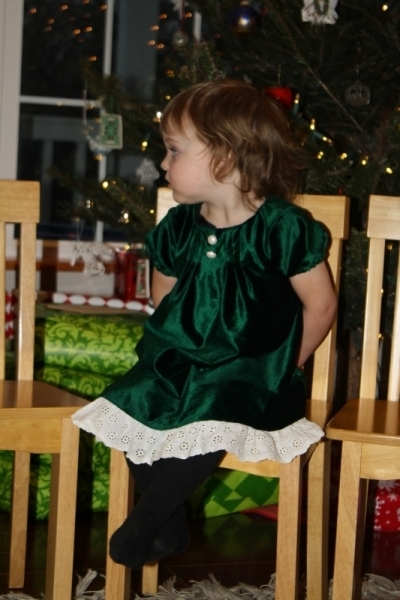
Tirzah Mae in her Christmas dress

In the nursery:

  • Louis has started eating solids (just in the past WEEK.) When we left for Christmas in Lincoln, he was still exhibiting tongue-thrust and only minimal interest in food. Now? If we’re eating, he wants some.
  • Tirzah Mae is currently obsessed with turning on light switches, washing her hands, and brushing her teeth. The heady power of being just a little bit taller and having access to a step stool means I’m racing to keep one step ahead of her (Nope, you can’t apply the fluoride toothpaste to your brush by yourself!)

In the craft room:

  • Having my family over for Thanksgiving forced me to get my craft room cleaned up – and Christmas made me glad it was clean. I made Tirzah Mae a Christmas dress, Louis a Christmas vest, and hemmed up a dated skirt for my own Christmas outfit. And I made Tirzah Mae a Christmas stocking, since the “Baby” stocking now goes to Louis.
  • I probably don’t do arts and crafts with Tirzah Mae nearly as often as I ought – but even just our few adventures with painting have convinced me that I need some way to deal with the onslaught of “art” in our home. Birthday cards have offered a solution. I’ve bought a bunch of blank greeting cards, and for January, we’re punching shapes out of Tirzah Mae’s paintings and then gluing those shapes on the fronts of the cards. Family members get a card and some of Tirzah Mae’s art – I get rid of a few paintings. Win-win, I think.

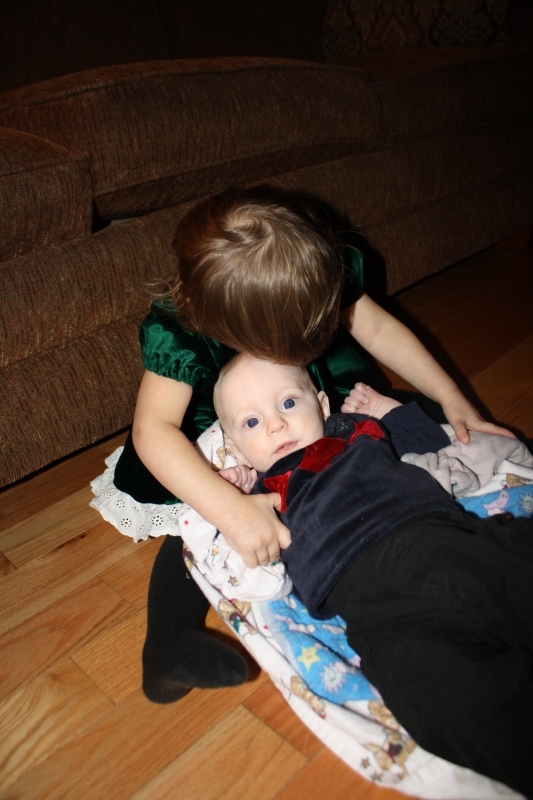
Louis in his Christmas vest (also Tirzah Mae)

In the garden:

  • I got a grow light for Christmas this year, so I’m looking forward to starting my own plants this year (I had some serious sticker shock after I bought plants last year!) But gardening is still a ways off as we’re currently enjoying a cold snap with highs in the mid 20’s.

In the library:
Currently reading…

  • Acts from the Bible
  • Church History in Plain Language by Bruce Shelley
  • Paul: In Fresh Perspective by N.T. Wright
  • Your Two-Year-Old: As they Grow by Parents Magazine
  • Dr. Jekyll and Mr. Hyde by Robert Louis Stevenson

Added to the TBR List:

Around the web:

  • A Flexible Goodies Policy – You want your kids to eat healthy foods, but you don’t want sweets to become a forbidden fruit that they hoard and binge on. What’s a mom to do? Dietitian Maryann Jacobsen has some excellent suggestions.

In blogging history:


Thankful Thursday: Winter Light

Thankful Thursday banner

Sometimes blogging silence means inactivity, as thoughts and words and actions slow to flow like tar. Other times, blogging silence belies activity as life lived takes precedence over life recorded.

While the former has frequently been true of my own winter silences, this year it is the latter that is most true.

For this year, this winter has been my BRIGHTEST winter since I began blogging some dozen years ago.

This week I’m thankful…

…for Winter Blues and light therapy
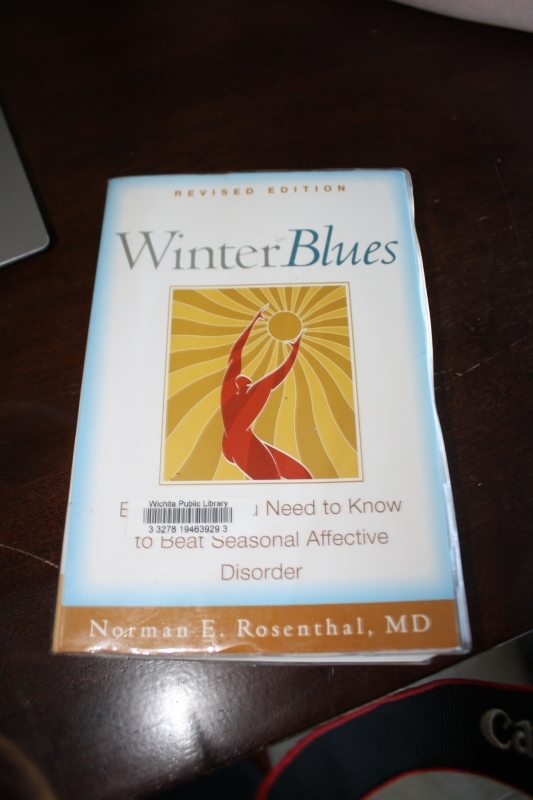
After reading the section on light therapy in Norman Rosenthal’s Winter Blues, I purchased a therapy light and began using it. Light therapy has made a huge difference in my energy levels and quality of life even as the days grew shorter and shorter this fall. Thanks to light therapy, I’ve been able to maintain household routines, to continue to interact socially, and to experience wonder this winter.

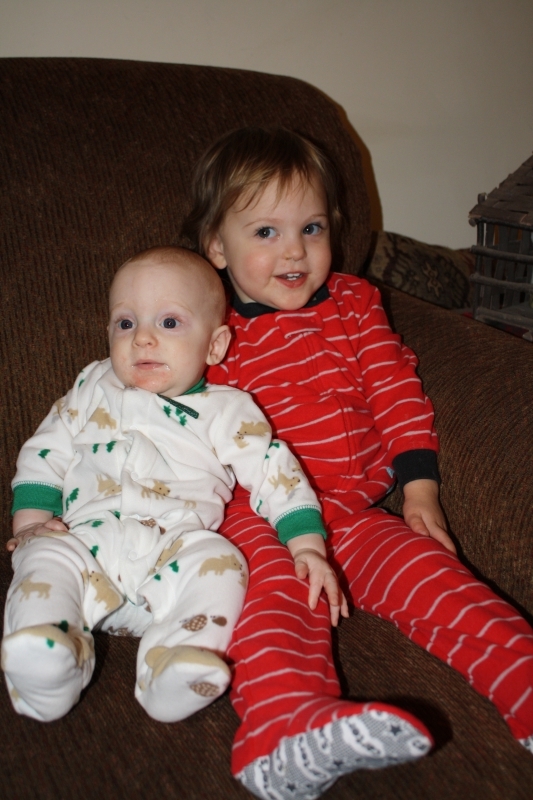
Louis grinning

…for baby smiles
Louis is the happiest baby. He smiles, he laughs, he smiles some more. He loves diaper changes, hugs, tummy time, and toys. He adores his big sister and laughs when she tickles him (even if she’s sitting on his belly while doing it.) He dotes upon his papa and gazes at him with unabashed admiration and joy when papa gets home from work. Even as I write this, Louis is playing his own form of peekaboo on the floor beside me, grinning every time I look over and cooing when I’m not looking to encourage me to look. His smile is a light that makes me shine too.

…for preparation for people
We had my family (an extra dozen people) over the weekend after Thanksgiving – and the preparations for their coming gave me the motivation to complete all sorts of projects I’d been procrastinating on. Making curtains for the picture window in the living room. Organizing my craft room. Unpacking the rest of those boxes in the basement and getting them put where they need to be. With the extra energy afforded by the lamp and the extra motivation afforded by the prospect of family coming, I got more done this winter than most – and productivity always brightens my day.

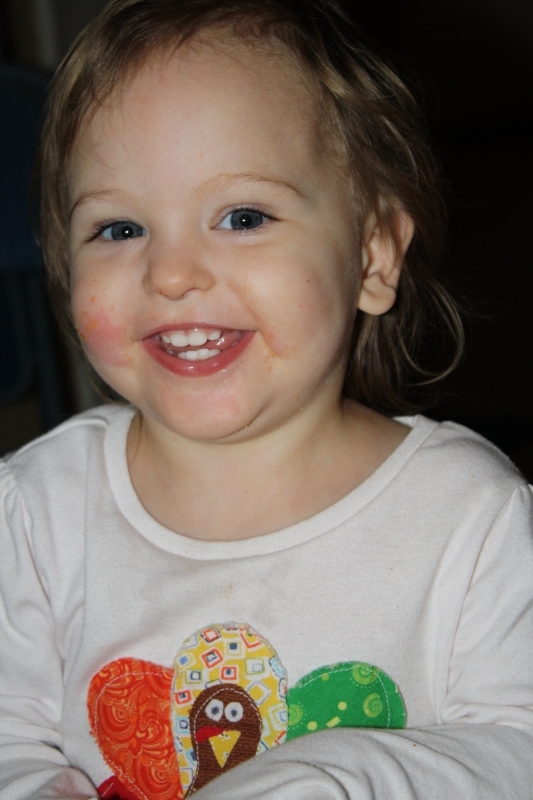
Tirzah Mae smiling

…for a toddler voice singing
I’ve been singing to Tirzah Mae since she was born, but she only rarely joins in. In fact, I don’t know that I’ve ever heard her join in. But this Advent she started singing all by herself. She’d cuddle her dolly and begin to sing:

“Away in a manger
No crib for a bed
The little Lord Jesus
lay down his sweet head
The stars in the manger
look down where he lay
The little Lord Jesus
asleep on the hay”

Not only this, but “Jingle Bells” and “It’s Raining, It’s Pouring” and “Baby It’s Cold Outside” (just that one line) and “Frere Jacques” and at least a half dozen other songs with recognizable lyrics and tune.

Hearing her sing – and especially hearing her sing about Jesus – delights my heart and brightens my life.

…for Emmanuel
The song that Tirzah Mae sings the most, and the line she repeats most often, is this:

“Rejoice, Rejoice
E-ma-a-an-u-el
Shall come to thee
O I-i-is-ra-el

Of all the things that have brightened this winter, this is the most wonderful.

God with us. Emmanuel.

I am thankful that

“The people who walked in darkness
have seen a great light;
those who dwelt in a land of deep darkness,
on them has light shone.
You have multiplied the nation;
you have increased its joy;
they rejoice before you
as with joy at the harvest,
as they are glad when they divide the spoil.
For the yoke of his burden,
and the staff for his shoulder,
the rod of his oppressor,
you have broken as on the day of Midian.
For every boot of the tramping warrior in battle tumult
and every garment rolled in blood
will be burned as fuel for the fire.
For to us a child is born,
to us a son is given;
and the government shall be upon his shoulder,
and his name shall be called
Wonderful Counselor, Mighty God,
Everlasting Father, Prince of Peace.
Of the increase of his government and of peace
there will be no end,
on the throne of David and over his kingdom,
to establish it and to uphold it
with justice and with righteousness
from this time forth and forevermore.
The zeal of the Lord of hosts will do this.”

~Isaiah 9:2-7 (ESV)

God has made Himself to shine before us in the person of Jesus Christ.

That is reason to give thanks. That is reason to rejoice.

So I do and so I shall.

“Rejoice, rejoice –
Emmanuel shall come to thee, O Israel.”


Book Review: Winter Blues by Norman Rosenthal

My mother took me to the doctor nearly every year of high school. I listed off the same complaints: decreased energy, depressed mood, weight gain, dry skin, general malaise. We asked that the doctor check my thyroid. Thyroid disorders run in my family after all. The doctor would ask more questions, would order a lab draw. A few days later, I’d get the results and discover that there was nothing wrong with me.

Every November, when the letter came announcing my normal lab results, I’d wonder what was wrong with me – because there clearly WAS something wrong with me, whatever the lab results said.

And then, one year in college (if I remember the timeline correctly), the doctor gave me a depression questionnaire and announced that there was in fact something wrong with me.

Seasonal Affective Disorder or SAD.

I started taking an antidepressant, and within a couple of weeks I felt better (by winter standards) than I’d felt for years. By summer standards? Me on an antidepressant still didn’t come close. But it was enough to convince me that this was indeed my problem.

Since the diagnosis of SAD ten or so years ago, I’ve experienced a couple of episodes of major depression and have read about depression in general. But I haven’t read any books on Seasonal Affective Disorder.

Winter Blues

Until this year. This year, I read Norman E. Rosenthal’s Winter Blues – and it changed my life.

Dr. Rosenthal was the researcher who first described seasonal affective disorder, a cyclic form of depression which varies throughout the year based on light exposure. Winter Blues describes the discovery of SAD and its features, discusses the diagnostic criterion for SAD (including a number of charts to help patients understand their own seasonal patterns), and details the treatment of SAD using phototherapy, psychotherapy, and pharmacotherapy. Additionally, Rosenthal includes a variety of case studies of seasonality throughout history, in modern times, and in language and poetry.

It is the section of phototherapy, the area where Rosenthal did a great deal of research, that changed my life. After reading the section on phototherapy (sometime in October), I ordered a Lightphoria 10,000 Lux Energy Lamp from Amazon (link is to Amazon, not an affiliate link). I’ve been using the light (which is smaller than ones described in Rosenthal’s chapter on phototherapy) approximately 30 minutes daily since the light arrived on Halloween. For the first winter in almost fifteen years, I have had the energy to work steadily throughout the day without collapsing into overwhelmed-ness. Interestingly enough, while the lights had a significant impact on my energy level, it did not fix my mood. My mood continued to decrease through November until I initiated my usual winter antidepressant. The combination of the two modes of treatment has resulted in the best winter I’ve had for at least a decade, maybe even two. My mood and coping has been so markedly different that my family remarks on the change.

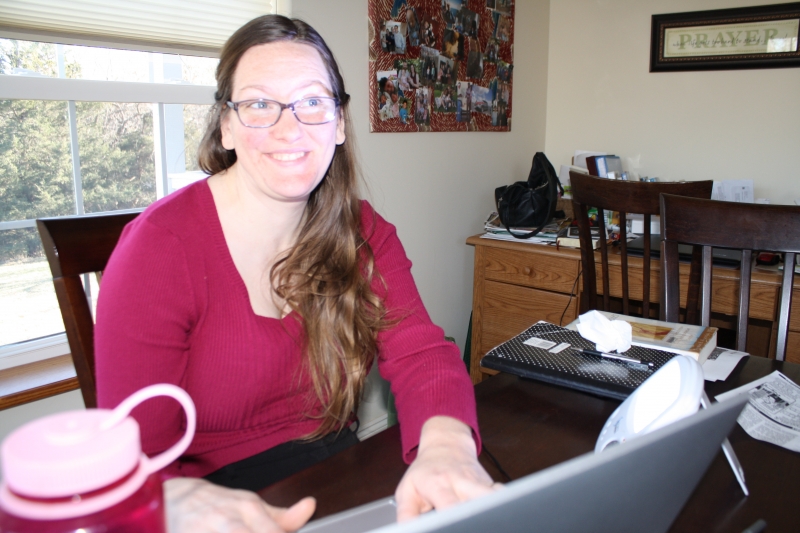
Using my therapy light
Using my therapy light while working on this blog post

This is not to say that I am an unequivocal fan of this book. Rosenthal’s language can be a bit flowery for my taste at times (at least for what is essentially a self-help book. Give me the facts, I say.) More distressing, while much of Rosenthal’s discussion of treatments is evidence-based, he recommends that SAD sufferers limit carbohydrates despite having only anecdotal (versus empirical) evidence of that strategy’s effectiveness.

Overall, though, I recommend Rosenthal’s Winter Blues for sufferers of SAD and those who suspect they might have some form of seasonality. Sections of this book may also be helpful for family members and friends of those with SAD.


Rating: 3 stars
Category: Medical/Psychology – Self Help
Synopsis: Rosenthal describes seasonal affective disorder and its treatment with an aim to help sufferers cope.
Recommendation: Recommended for those who suffer from seasonal affective disorder or possibly for sufferers’ close family and friends.


Permission to not do everything

The desire to learn everything and to do everything. I suspect it’s quite common among homeschool-graduates-turned-homeschool-mothers. But even if it’s not as common as I think, I know at least for one person who has it.

In her case, it tends to cause a great deal of trouble.

Because it’s just not possible to do everything. There aren’t enough hours in a day, weeks in a year, or years in a lifetime.

So when she tries to do everything, she ends up frustrated and angry. Angry that she can’t do it all. Angry that other people seem to be able to do everything they want to be doing. Frustrated that even her mere two dozen major goals for the year haven’t been accomplished. Frustrated that only the hundred or so things on her to-do list don’t get accomplished each day. Frustrated that her children are taking her away from doing everything. Frustrated that her home is taking her away from doing everything. Frustrated that people e-mail or call on the phone or tag her on Facebook – keeping her from doing everything. And then she gets frustrated and angry because she knows she shouldn’t feel this way.

She knows she can’t actually learn everything. She knows she can’t actually do everything. She knows that caring for her children, caring for people, caring for her home is the important work she ought to be doing. But she struggles at the end of each day, feeling like she should have done more. No matter what the accomplishments of the day are, she should have done more.

She should have blogged, among other things. She is a blogger after all. She loves to write, she wants to write, she wants to grow as a writer. She’s not at all ready to abandon the blog, the title, the task. But the days are busy and the nights too short. The ideas for posts are there, but never time in front of the computer to turn them into a reality. So she posts once a month, maybe even less. Yet every day, she feels this is one of those things she ought to be doing, wants to be doing. She wants to do everything.

She needs permission. Permission to not do everything.

And so, while I have never intentionally done so before, I am taking a hiatus from bekahcubed (the blog). bekahcubed (the woman) needs permission to not do everything. bekahcubed (the woman) needs permission to not write, to not feel guilty.

I need to give her that permission.

bekahcubed (the blog) will be dormant for the remainder of the year. Should bekahcubed (the woman) feel the urge to write, she will do so (as she has opportunity) and will store up her writings to be shared after the new year. Then, perhaps, she will have achieved the elusive balance, or lowered her standards, or blah. blah. blah. At any rate, she’ll evaluate at that point to see what role blogging should be playing in her future.

For now, blogging is one of those things she needs permission not to do. And I’m giving her that permission.

So there.


Set forth Thee: A Prayer

Lord, grant us calm, if calm can set forth Thee;
Or tempest, if a tempest set Thee forth;
Wind from the east or west or south or north,
Or congelation of a silent sea,
With stillness of each tremulous aspen tree.

Still let fruit fall, or hang upon the tree;
Still let the east and west, the south and north,
Curb in their winds, or plough a thundering sea;
Still let the earth abide to set Thee forth,
Or vanish like a smoke to set forth Thee

~by Christina Rossetti

Calm or tempest.
Wind or stillness.
Fruit falling or remaining.
Stillness or wind.
Remain or disappear.

What makes this antonymous collection not only bearable but desirable?

That God might be glorified.

“I know how to be brought low,
and I know how to abound.
In any and every circumstance,
I have learned the secret
of facing plenty and hunger,
abundance and need.”
~Philippians 4:12 (ESV)

Lord, bring me low, if dejection set forth Thee;
Or cause me to abound, if abundance set Thee forth;
Teach me the secret of contentment
whatever my circumstances may be

Let my home, my heart, my hands be filled with plenty
If plenty lifts You high.
If hunger makes You great,
may I never eat again

Still let this earth, and I, abide to set Thee forth,
Or vanish like a smoke to set forth Thee


Ten Years and Two Days Ago…

Ten years and two days ago, I began my own personal reading project: to read every book in my local branch library.

A lot has changed since then, but I’m still busy reading – and writing down each book I’ve read and closing categories as I go.

TOTALS as of Sept 5, 2016 (10 years or 3653 days)

Category Items Complete Categories Closed Items/day
Juvenile Picture 1394 442 0.38
Juvenile, Board Books 125 45 0.03
Juvenile, First Readers 65 3 0.02
Juvenile, Chapter 92 7 0.03
Juvenile Fiction 310 25 0.09
Juvenile Nonfiction 213 1 0.05
Teen Fiction 43 4 0.01
Teen Nonfiction 5 0 0.00
Adult Fiction 454 70 0.12
Adult Nonfiction 839 41 0.23
Audio CD 639 64 0.17
Juvenile DVD 48 0 0.01
Adult Fiction DVD 93 0 0.03
Adult Nonfiction DVD 35 0 0.01
Periodicals 66 0 0.02
Total 4421 items
1.21 items per day

Looking at the “items per day” column, I see that the numbers are rather unimpressive – certainly nothing compared to what the numbers were when I first started. Perhaps I will knock that column off the next accounting. I’ve also determined that there’s information I’m interested in that isn’t captured by the above table (which I’ve been filling out since I first blogged about my challenge): how many items am I completing annually (on average and in the past year) and how quickly am I closing categories?

Last year’s reading (and the annual average completed)

Category Categories Completed Items Completed Annual Average Items Completed
Juvenile Picture 9 59 139
Juvenile, Board Books 30 71 12.5
Juvenile, First Readers 0 1 6.5
Juvenile, Chapter 0 0 9.2
Juvenile Fiction 0 2 3.1
Juvenile Nonfiction 0 34 21.3
Teen Fiction 0 3 4.3
Teen Nonfiction 0 0 0.5
Adult Fiction 0 11 45.4
Adult Nonfiction 7 83 83.9
Audio CD 64 90 63.9
Juvenile DVD 0 0 4.8
Adult Fiction DVD 0 3 9.3
Adult Nonfiction DVD 0 1 3.5
Periodicals 0 0 6.6
Total 110 358 442

Notes:

  • I didn’t even read one hundred (full-size) books in the past year. I find this shocking and somewhat ego-flattening.
  • I need to get serious about closing categories if I’m going to complete this thing (but who am I kidding, it’s an impossible goal.)
  • That said, I have quite a few categories that have just one or two more books in them before I can close them – so why don’t I just get them finished?

What I’ve found most fascinating this year has been to break down my reading into how many days (on average) it takes me to get through a library item (over the past year only).

Category Time to Read Notes
Audio CDs 4 days With the exception of Christmas music between Thanksgiving and Christmas, all of these are listened to when I’m driving with just myself and the kids.
Adult Nonfiction 4.4 days I read a lot of nonfiction.
Board Books 5.2 days It’s rather surprising I don’t go through these more quickly. Then again, I don’t count repeats.
Picture Books 6.2 days Ditto board books
Adult Fiction 33.3 days Not quite one a month. And here I’d been saying two a month.

So concludes my report on the last ten years’ reading :-)


Thankful Thursday: Flexibility

Thankful Thursday banner

I don’t consider myself to be the most flexible person (either physically or dispositionally). I like things the way I’ve arranged them and don’t tolerate changes well. Which is why I’m so thankful for the grace of God over the past week in a) enabling others to be flexible to make things easier for me and b) enabling me to be flexible when I needed to be.

This week I’m thankful…

…for back to back appointments
Louis had his two month well-child appointment last week and I needed a thyroid check as well. When I called a few weeks back, the receptionist was happy to reschedule us slightly so Louis and I could have back to back appointments (especially handy now that we live a half hour away from the doctor’s office – and now that I have two kids to get ready for trips out!) And for Louis’s four month appointment? We were able to schedule that back to back with Tirzah Mae’s 2 year appointment. Perfect.

…for flu shots
It’s earlier than my reminder to get my annual flu shot (my phone rings in October to remind me to get it), but I heard that Walmart has the vaccine and remembered to ask my doctor if he had it too. He did, so I won’t have to remember to arrange getting one in October because I’ve already got it taken care of.

…for different patterns
Louis’s 2 month shots (combined with my flu shot) completely kicked our butts. The day was disrupted first by the appointment, then by Louis’s need to breastfeed continuously. There was no way I could complete my ordinary routines. But I always feel awful when I spend the day simply sitting around breastfeeding. So, rather than playing catch-up and getting frustrated that I couldn’t catch up, I made myself a little game to help me still accomplish something around the house – and it worked. I gave Louis the attention he needed and managed to not end the day frustrated over how little I’d accomplished. Win-win.

Tirzah Mae exercising
An old photo of Tirzah Mae and I exercising – Tirzah Mae wanted a knee brace just like mama’s

…for substitutions
I can hardly believe it. I ran out of pinto beans with bean burritos on the menu. But I had just enough black beans to finish out the recipe. Then over the weekend, I started tomato soup going only to discover that the can of tomato juice I’d thought was still in the basement? Not there. But I did have some diced tomatoes that my mom had canned for me in tomato juice. They worked perfectly (and I’m double checking my pantry before I start a recipe from now on out – relying on memory when it’s been two and a half months since I was in charge of cooking full-time is bad news. Which reminds me, have I mentioned how thankful I am for the many women who’ve been providing me with meals, either in the freezer or freshly prepared, so I didn’t have to cook for TWO MONTHS after Louis’s birth?!?)

…for my husband’s flexible schedule
Daniel is blessed to be able to set his own hours at work – which means if Louis didn’t let me sleep overnight, Daniel can take Louis and let me sleep in and then go to work after I wake up. Or he can come home early if my day isn’t going well and make up the time later or work from home. I try not to take advantage of his flexibility, but there are times when Daniel’s flexibility is a major sanity saver for me. I am so thankful for him.

…for an unchanging God
Life with littles means plans change in an instant. Baby’s hungry? Drop everything. Blow out diaper? Drop everything. Water emptied all over the living room rug? Drop everything. (And dozens more reasons to drop everything!) But even as my schedule must flex, my priorities must change, my routines must be disrupted, I can rest knowing that God never shifts, never changes, is never disrupted. As he gives me grace, I can fix my heart, my mind, my emotions on his unchanging nature – and allow his unchanging grace to help me be flexible with the other stuff that does change.


Nightstand (August 2016)

This last hospitalization and newest newborn experience hasn’t been as conducive to reading as the prior. Having a toddler in addition to a newborn means “down time” isn’t down time. My “down time” in the hospital was spent coordinating care for Tirzah Mae and updating the many helpers who made some degree of normalcy possible for her. And now that I’m home, I’m still finding it difficult to find time to read. Tirzah Mae splashes in the water from my bath (whether or not she’s in the tub with me), talks to me while I’m going potty, and wants to hold hands with me and “dance” when I’m exercising – all activities I used to take advantage of as reading time. Louis is generally “lower maintenance” than Tirzah Mae was, sleeping contentedly in his bassinet and playing quietly with his hands on a blanket on the floor. But Louis requires two hands for breastfeeding, meaning that if I don’t have a book set up on my lap before we begin breastfeeding it’s hard to get one started.

As a result, my reading has been sporadic and one-sided. You’ll notice almost all the books I’ve finished are “books for growing”. This is because these can generally be read paragraph-by-paragraph, whereas novels or informative (versus instructional) nonfiction need to be consumed in larger chunks.

My current library haul

Books for Growing:

  • Breastfeeding with Confidence by Sue Cox
    A short (128 pages) introduction to breastfeeding. I didn’t learn a whole lot of new information (since supporting breastfeeding was a good portion of my job as a WIC dietitian), but feel this would be excellent reading for a motivated pregnant mom (who doesn’t have time or energy to read The Womanly Art of Breastfeeding, which, though helpful, is entirely too long for many women.)
  • 101 Questions and Answers about Carpal Tunnel Syndrome by Steven J. McCabe
    Everything you need to know about Carpal Tunnel Syndrome, arranged in an easily-readable (and searchable) question and answer format. I developed Carpal Tunnel Syndrome during pregnancy and appreciated learning a little more about it. Also, I hope never to get it again!
  • Baby and Toddler Sleep Program by John Pearce with Jane Bidder
    The first book I’ve read that recommends total extinction. While I haven’t the constitution for total extinction, the multitude of other “environmental” tips helped as I worked to wean Tirzah Mae off needing me in bed with her to fall asleep. We’d gotten in the habit of breastfeeding lying down in her bed during the exhausted phase of my pregnancy – but she got too dependent on it, so we had to work towards a more manageable sleep routine. We were still doing a version of graduated extinction when I went into the hospital – but she’s sleeping great now. I hold to my earlier opinion that “sleep programs” are less than helpful “out of the box” – but that the discerning parent can find helpful tips in every “sleep program”.

Books for Knowing:

  • Overdressed by Elizabeth L. Cline
    An exposé of the “fast fashion” industry, Elizabeth Cline’s Overdressed discusses how we went from having two seasons of fashion to having trends changing on a monthly, even weekly, basis. Cline details the damage fast-fashion has done to the American clothing industry, to the quality of clothing, as well as to the style of the average American. Whereas individuals used to buy clothing a couple times a year, buying quality intended to last and mending or altering clothing as needed, now people are in the habit of buying clothing continuously and just as continuously discontinuing use or throwing items out as their cheaply produced and cheaply purchased clothing wears out or falls apart. I have a great deal of sympathy for Cline’s complaints regarding poor quality, disposable clothing and the continuous purchasing of clothing. On the other hand, Cline is decidedly anti-free-market and pro-union, not positions I support. Nevertheless I found this book enjoyable and informative. It has bolstered my resolve to purchase clothes used and/or to make my own whenever possible.

While I mostly just finished “Books for growing” this month, I am hopeful that in the upcoming months I can reestablish more balance in my reading. I’m currently at work on books from each of my five categories, so I’m feeling pretty good about the prospect.

Books that are up next

Here’s what I’ve got going right now:

  • For loving: To Fly Again by Gracia Burnham
  • For growing: Breastfeeding Special Care Babies by Sandra Lang
  • For knowing: Summer for the Gods by Edward J. Larson
  • For seeing: Selected Poems by Christina Rossetti
  • For enjoying: Listening Valley by D.E. Stevenson

Don’t forget to drop by 5 Minutes 4 Books to see what others are reading this month!

What's on Your Nightstand?